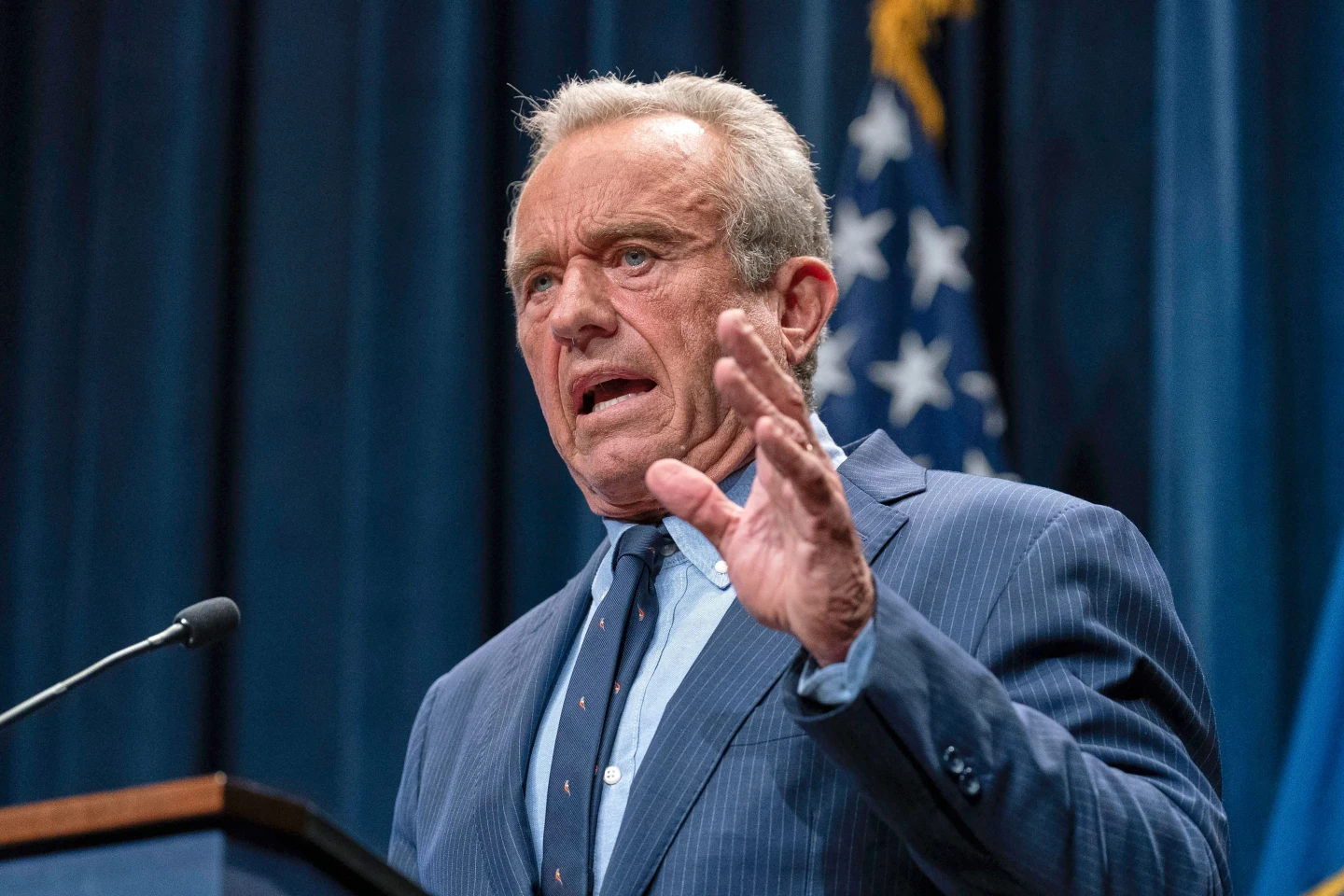
A federal vaccine advisory committee convened Thursday in Atlanta to discuss whether newborns should still receive the hepatitis B vaccine on the day they are born. For decades, the government has recommended that all babies be vaccinated against the liver infection immediately after birth, which is credited with preventing thousands of illnesses.
However, the committee, led by U.S. Health Secretary Robert F. Kennedy Jr., is considering limiting the birth dose to only those infants whose mothers test positive for hepatitis B. This would revert to a public health strategy that was abandoned over three decades ago. Parents and doctors for other newborns would have the choice to decide on administering the vaccine.
Committee member Vicky Pebsworth mentioned that a workgroup was assigned in September to assess the necessity of a birth dose for mothers who test negative for hepatitis B. Pebsworth emphasized the need to address the dissatisfaction of stakeholders and parents with the existing recommendations.
The committee’s recommendations traditionally influence the Director of the Centers for Disease Control and Prevention (CDC), who usually adopts their guidance. However, the CDC currently lacks a permanent director, leaving acting director Jim O'Neill to make the decisions.
Kennedy, who is known for his anti-vaccine activism, had previously fired the entire 17-member panel this year, replacing it with individuals, including several with anti-vaccine views. The panel’s recent decisions, which have sparked discontent among major medical organizations, include recommendations to remove the preservative thimerosal from flu vaccines without evidence of harm, as well as not recommending COVID-19 vaccinations for vulnerable populations.
The hepatitis B virus is a serious infection that can lead to chronic health issues, particularly in infants. Vaccination at birth has proven successful in reducing cases, dropping from around 18,000 annually to 2,200. Nonetheless, some committee members have expressed concern about vaccinating all newborns.
Kennedy's advisory meetings have included presentations that lean towards discredited anti-vaccine theories rather than scientific consensus traditionally provided by CDC scientists. The expected changes in guidelines pose significant implications for public health initiatives that have aimed to protect newborns from hepatitis B.