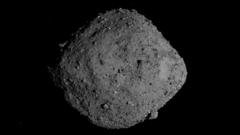
Asteroid Bennu, measuring 500 meters in diameter, has been the focus of groundbreaking research after a NASA spacecraft successfully retrieved dust samples that have now provided remarkable insights into the building blocks of life. These samples contain a plethora of minerals and thousands of organic compounds, including vital amino acids and nucleobases, which are integral to proteins and DNA, respectively.
While these findings do not imply that life ever existed on Bennu, they bolster the hypothesis that asteroids may have delivered essential ingredients for life to Earth billions of years ago. This research may also apply to other celestial bodies within our solar system.
Prof. Sara Russell from London's Natural History Museum remarked, "What we've learned from it is amazing... it enables us to answer these really, really big questions about where life began." The findings have been documented in two studies published in the journal Nature.
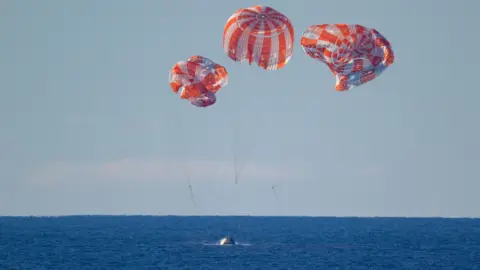
The ambitious sample collection mission, performed by NASA's Osiris Rex spacecraft, involved the use of a robotic arm to gather material from Bennu before returning it to Earth in 2023. The approximately 120 grams of black dust, although seemingly minimal, has proven invaluable, with scientists eagerly analyzing each grain for insights.
Scanning electron microscopes have uncovered a diverse array of nitrogen and carbon-rich compounds, comprising 14 of the 20 amino acids essential for life and the four fundamental nucleobases of DNA. The presence of various minerals and salts suggests that water previously existed on the asteroid, and ammonia, a key component for biochemical reactions, was also identified in the samples.
Prof. Russell noted the uniqueness of some of the minerals found in Bennu, which had not been observed in previous meteorites. The research also endorses the long-standing theory that asteroids played a significant role in transporting water and organic materials to Earth, which were fundamental for the development of life.
As Dr. Ashley King of the Natural History Museum explained, the early solar system was chaotic, populated by countless asteroids that likely bombarded the nascent Earth, providing the elements necessary for oceans and life. He stated, "Earth is unique... but we know asteroids were delivering those ingredients throughout the Solar System."
The quest to comprehend the conditions that fostered life on Earth and the potential for life on other planets continues, as researchers delve deeper into the treasures retrieved from Bennu and cast their gaze toward unexplored regions of space.
While these findings do not imply that life ever existed on Bennu, they bolster the hypothesis that asteroids may have delivered essential ingredients for life to Earth billions of years ago. This research may also apply to other celestial bodies within our solar system.
Prof. Sara Russell from London's Natural History Museum remarked, "What we've learned from it is amazing... it enables us to answer these really, really big questions about where life began." The findings have been documented in two studies published in the journal Nature.
The ambitious sample collection mission, performed by NASA's Osiris Rex spacecraft, involved the use of a robotic arm to gather material from Bennu before returning it to Earth in 2023. The approximately 120 grams of black dust, although seemingly minimal, has proven invaluable, with scientists eagerly analyzing each grain for insights.
Scanning electron microscopes have uncovered a diverse array of nitrogen and carbon-rich compounds, comprising 14 of the 20 amino acids essential for life and the four fundamental nucleobases of DNA. The presence of various minerals and salts suggests that water previously existed on the asteroid, and ammonia, a key component for biochemical reactions, was also identified in the samples.
Prof. Russell noted the uniqueness of some of the minerals found in Bennu, which had not been observed in previous meteorites. The research also endorses the long-standing theory that asteroids played a significant role in transporting water and organic materials to Earth, which were fundamental for the development of life.
As Dr. Ashley King of the Natural History Museum explained, the early solar system was chaotic, populated by countless asteroids that likely bombarded the nascent Earth, providing the elements necessary for oceans and life. He stated, "Earth is unique... but we know asteroids were delivering those ingredients throughout the Solar System."
The quest to comprehend the conditions that fostered life on Earth and the potential for life on other planets continues, as researchers delve deeper into the treasures retrieved from Bennu and cast their gaze toward unexplored regions of space.