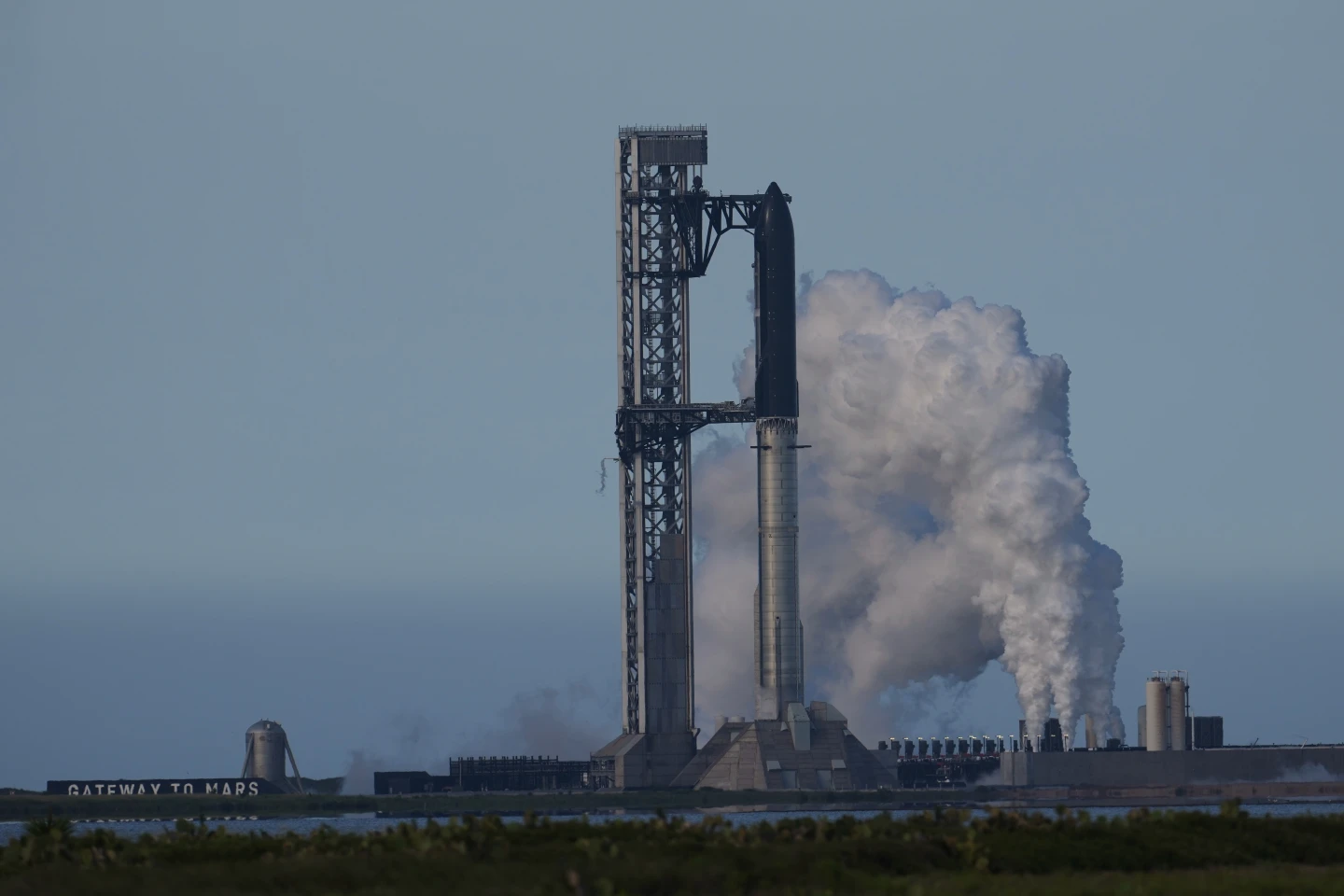
CAPE CANAVERAL, Fla. — SpaceX's Starship launch attempt Thursday evening was abruptly canceled just 30 seconds before liftoff when critical hydraulic system failures halted the countdown. The 407-foot (124-meter) rocket, poised to conduct a space-skimming test flight extending halfway around the world from Starbase near the Mexican border, was forced to abort due to issues with the brand-new launch pad infrastructure.
SpaceX CEO Elon Musk confirmed the specific problem: the hydraulic pin securing the launch tower's arm failed to retract, a critical component for the launch sequence. While the exact cause remains under investigation, Musk stated the issue could be resolved quickly, with a potential Friday launch attempt scheduled if engineers make the necessary repairs. The rocket, designed to carry astronauts and cargo to the moon and beyond, was carrying 20 mock Starlink satellites for this test flight, which would conclude with a controlled splashdown in the Indian Ocean after an hour-long journey.
This marks the 12th test flight for Starship and the first since a previous attempt in late 2022. The successful execution of this mission is vital for NASA's Artemis program, which aims to land the first woman and next man on the moon. The test flight also serves as a critical demonstration of Starship's reusability and reliability for future deep-space missions.
The technical setback occurred just one day after Musk announced SpaceX would be going public with an initial public offering. Despite the delay, the company remains confident in the Starship program's trajectory, with engineers working urgently to prepare for the next launch window. If the Friday attempt succeeds, it would bring the rocket one step closer to its goal of enabling sustained human presence beyond Earth orbit.}
SpaceX CEO Elon Musk confirmed the specific problem: the hydraulic pin securing the launch tower's arm failed to retract, a critical component for the launch sequence. While the exact cause remains under investigation, Musk stated the issue could be resolved quickly, with a potential Friday launch attempt scheduled if engineers make the necessary repairs. The rocket, designed to carry astronauts and cargo to the moon and beyond, was carrying 20 mock Starlink satellites for this test flight, which would conclude with a controlled splashdown in the Indian Ocean after an hour-long journey.
This marks the 12th test flight for Starship and the first since a previous attempt in late 2022. The successful execution of this mission is vital for NASA's Artemis program, which aims to land the first woman and next man on the moon. The test flight also serves as a critical demonstration of Starship's reusability and reliability for future deep-space missions.
The technical setback occurred just one day after Musk announced SpaceX would be going public with an initial public offering. Despite the delay, the company remains confident in the Starship program's trajectory, with engineers working urgently to prepare for the next launch window. If the Friday attempt succeeds, it would bring the rocket one step closer to its goal of enabling sustained human presence beyond Earth orbit.}