NOMINAL CONTROLS OF A SPACE HAVEN
The International Space Station (ISS) is no stranger to fine‑tuning its habitat, but this week the crew found themselves whisked from routine operations to a high‑stakes contingency. A sudden spike in air loss in the transfer tunnel that links the station’s Russian segment to the American module sent a flare of alarms through NASA’s command centre in Houston.
In a split‑second decision, NASA ordered five of the seven astronauts – the American, Canadian, and two European crew members – to evacuate to the attached SpaceX Dragon “Freedom” spacecraft. The shuttle, already docked and anchored to the station, had remained in a standby state with the crew ready in their suits to undock abruptly at a command from Mission Control.
At the same time, Russian cosmonauts – commander Sergey Kud‑Sverchkov and flight engineer Sergei Mikaev – were attempting to splice a crack in the Russian Zvezda service module. Their approach involved using a hand saw to pry a narrowly‑defined opening, a method not approved by NASA. The resulting tension between mission protocols prompted the safe‑haven directive, giving astronauts a chance to regroup and refocus on the broader mission while ensuring station integrity was not compromised.
“Given this development, NASA has instructed the crew members inside the Dragon spacecraft to end the safe‑haven procedures and return to planned operations aboard the International Space Station,” said NASA spokesperson Bethany Stevens on X.
Russian news agency Tass, echoing Roscosmos’ assessment, said the incident posed no immediate safety threat to the crew or the station’s systems. However, the decision to use the Dragon as a lifeboat underscored the evolving dynamics of international collaborations on the orbiting laboratory.
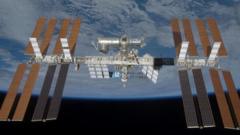
Since 1998, the ISS – spanning the length of a football field – has been the brainchild of a United States–Russia‑led consortium that includes Canada, Japan, and 11 European nations. Its operations, gradually shared among multiple agencies, are guided by both common protocols and country‑specific procedures, a balance that was tested this afternoon.