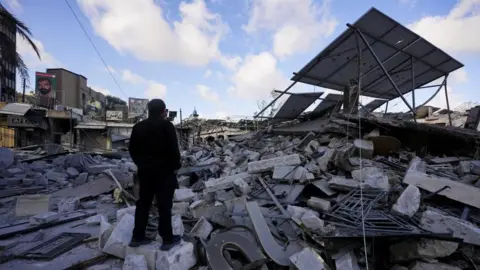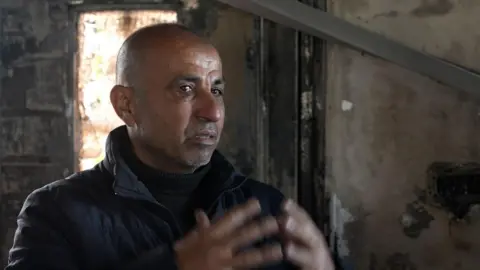
In the Palestinian village of Deir al-Hatab, a shadow of fear looms following brutal attacks by Israeli settlers that left several homes damaged and at least ten people injured. Barhan Omar, a local bank manager, recounted the horror of watching as settlers besieged his family's villa, insisting that the assault was intended not only to vandalize property but also to incite fear and violence toward women and children.
'They came in big numbers. This was organized terrorism,' Omar said, reflecting on the traumatizing experience that forced him and his children to take refuge on their roof.
This incident is part of a disturbing pattern of settler violence that has escalated across the occupied West Bank, particularly since the outbreak of the Iran war. Residents are profoundly unsettled, as many had previously believed their village would remain untouched by such violence, contrasting sharply with troubles faced in other areas.
The violence was ignited after the funeral of an Israeli settler, where emotions ran high and tensions spilled over into aggression. Witnesses reported stones being thrown and shots fired with alarming frequency, igniting fears of further outbreaks of violence.
Earlier this year, escalating violence has led to numerous Palestinian displacements, echoing a concerning trend of settler aggression that many view as a systematic policy aimed at undermining Palestinian communities.
Analysis from human rights groups indicates that current settler actions align with long-standing narratives of ethnic cleansing, spurred on by policies that prioritize settlement expansion over the safety of Palestinian residents.
Amid mounting concerns, local officials and residents worry about the increasing bravado displayed by settlers, further threatening stability in a region already fraught with conflict. As tensions simmer, many Palestinians express defiance, vowing to protect their land and livelihood against ongoing encroachments.}
'They came in big numbers. This was organized terrorism,' Omar said, reflecting on the traumatizing experience that forced him and his children to take refuge on their roof.
This incident is part of a disturbing pattern of settler violence that has escalated across the occupied West Bank, particularly since the outbreak of the Iran war. Residents are profoundly unsettled, as many had previously believed their village would remain untouched by such violence, contrasting sharply with troubles faced in other areas.
The violence was ignited after the funeral of an Israeli settler, where emotions ran high and tensions spilled over into aggression. Witnesses reported stones being thrown and shots fired with alarming frequency, igniting fears of further outbreaks of violence.
Earlier this year, escalating violence has led to numerous Palestinian displacements, echoing a concerning trend of settler aggression that many view as a systematic policy aimed at undermining Palestinian communities.
Analysis from human rights groups indicates that current settler actions align with long-standing narratives of ethnic cleansing, spurred on by policies that prioritize settlement expansion over the safety of Palestinian residents.
Amid mounting concerns, local officials and residents worry about the increasing bravado displayed by settlers, further threatening stability in a region already fraught with conflict. As tensions simmer, many Palestinians express defiance, vowing to protect their land and livelihood against ongoing encroachments.}