In brief
In late 2023 an unprecedented wave of demolitions hit the Silwan area of East Jerusalem, tearing down 59 homes and setting a precedent for further displacement. Palestinian residents claim the actions are part of a larger strategy to erase their presence and satisfy settlement plans, while Israeli officials cite a planned “future park” effort. The city’s legal framework, combined with rising settler activity, intensifies the crisis, drawing condemnation from the EU and human‑rights groups. Those left homeless face scarce housing options and a bleak future.
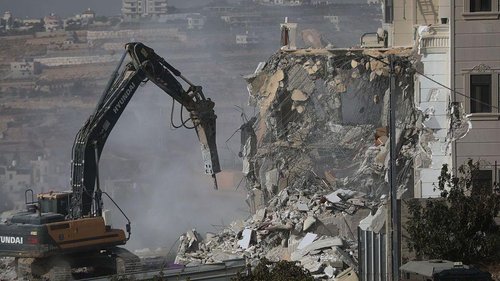
From a hillside overlooking Jerusalem’s bustling Old City, the sound of an excavator’s wheel saw a Palestinian house in the Al‑Bustan neighborhood crumble under the weight of Israel’s demolition orders. That scene has become all too familiar: a surge of bulldozers has demolished 59 homes in the Silwan area since late 2023, a striking rise that runs parallel to growing violence in Gaza, Iran, and Lebanon.
For many families, each demolition marks the loss of a lifetime’s work. Salah Awad, 58, sits in the last surviving floor of his ruined property and laments the absence of a future, while the residents of the same street report that their children now are seeing only ruins where they once saw their homes. “We built this house with our hands, with our money. Now we end up back to zero,” says an elder, expressing a sentiment that echoes across the community.
Jerusalem’s administrative body has justified the demolitions by claiming a need to create a “biblical‑themed park” in Al‑Bustan. The plan, announced 20 years ago, has shifted from dense, narrow streets to a sprawling, tourist‑centric landscape that places Israeli settlers at the center. Yet the eye‑watering photographs of destroyed homes show clear evidence that the city’s decade‑long policy is erasing the Palestinian presence for a political narrative.
The broader issue is not just a single demolition, but a complex system that blocks Palestinians from obtaining permits in East Jerusalem, whereby only 7 % of new housing was approved for them in 2025. Combined with an urgent need for public space, the city’s strategy has turned the neighborhood into an evacuation zone. Many residents who are threatened with further demolitions are forced to take sledgehammers to destroy their homes before they are bulldozed by officials, which is a costly gamble that can only be afforded by a tiny fraction of the community.
Legal challenges offer no relief: a court ruling ordered the Basha family to leave their home, a family that traced its roots in East Jerusalem back to the early twentieth century. The family’s legal appeal is on hold while the city’s new land‑registration system, introduced in 2018, is used to re‑classify Palestinian properties for Israeli appropriation.
Amid these developments, international bodies have reached out. The European Union described the situation in East Jerusalem as “dire,” and reiterated that it opposes Israel’s settlement policy. Human‑rights groups have demanded that the international community step in to uphold the laws that forbid forced displacement.
If Jerusalem is to become an inclusive city for Israelis and Palestinians alike, the bulldozers must stop and a conversation about legal rights and housing needs must begin. Without it, the future of these families remains erased, a reality that is as much a loss of life as it is a loss of history.