There were violent clashes between anti-government protesters and security forces in several locations in Iran on Wednesday, as a wave of unrest sparked by the country's economic crisis continued for an 11th day.
Iran's semi-official Fars news agency, which is close to the Revolutionary Guards, reported that two policemen were shot and killed by armed individuals in the southwestern town of Lordegan.
Videos posted on social media depicted a tense standoff between protesters and security forces, with gunfire audible in the background.
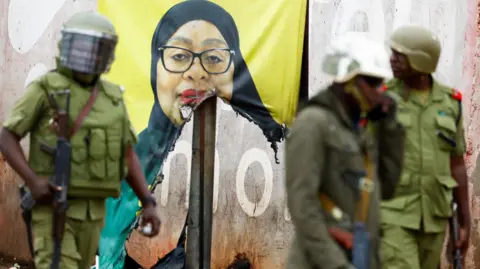
In multiple areas, security forces were observed firing guns and deploying tear gas toward crowds of protesters, many of whom retaliated by throwing stones.
According to the Human Rights Activist News Agency (HRANA), the protests have now spread to 111 cities and towns across all 31 provinces. At least 34 protesters and four security personnel have reportedly lost their lives during the unrest, with around 2,200 arrests made.
BBC Persian has confirmed the identification of 21 deceased individuals, while Iranian authorities claim five security personnel have died.
The demonstrations began on December 28, 2026, driven by widespread anger over the sharp decline in the value of the Iranian currency, the rial, against the US dollar. Over the past year, the rial has plummeted, exacerbating inflation that has surged to 40%, stemming from sanctions imposed due to Iran's nuclear program in addition to poor government management and corruption.
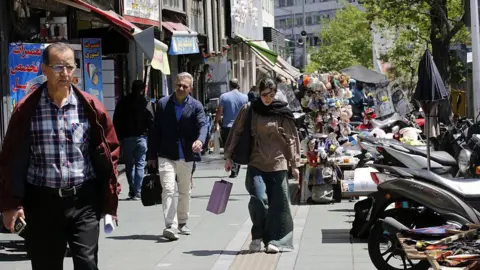
Initially, shopkeepers took to the streets in Tehran, and university students soon joined the movement. Protesters have often vented their anger with chants against Iran's Supreme Leader, Ayatollah Ali Khamenei, and in support of Reza Pahlavi, the exiled son of Iran’s former Shah.
On Wednesday, videos authenticated by BBC Persian showcased crowds in Qazvin, chanting Death to the dictator and Long live the Shah. In Mashhad, protests escalated into clashes with security forces that were forced to retreat, while similar confrontations were reported in other cities like Abadan and Aligudarz.
After a cabinet meeting on Wednesday, Vice-President Mohammad Jafar Qaempanah stated that no security measures would be enforced against peaceful protesters. However, he described those who harm security forces as rioters, suggesting a difference in treatment between peaceful demonstrators and violent offenders.
As the unrest grows, Iranian authorities are navigating a complex landscape of anger and security, with political scientists suggesting that fears of a stark international response may be influencing their approach to crowd control this time.
}