In brief
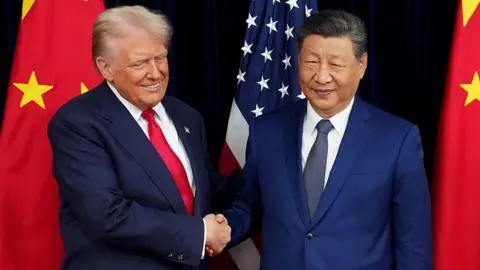
Recent discussions surrounding global tariffs highlight their significant role in shaping economic trends. While President Trump emphasizes job creation through tariffs, experts express concerns over a forecasted decrease in global economic growth. The International Monetary Fund projects a decline to 3.1% in 2026, reflecting ongoing impacts from trade-related tensions between the United States and China. With critical negotiations anticipated in the coming year, the ramifications of these tariffs could define the global economic landscape for years to come.
President Trump's favourite word is tariffs. He reminded the world of that in his pre-Christmas address to the nation.
With the world still unwrapping the tariffs gift from the first year of his second term in office, he said they were bringing jobs, higher wages and economic growth to the US.
That is hotly contested. What is less debatable is that they've refashioned the global economy, and will continue to do so into 2026.
The International Monetary Fund (IMF) says that although the tariff shock is smaller than originally announced, it is a key reason why it now expects the rate of global economic growth to slow to 3.1% in 2026. A year ago, it predicted a 3.3% expansion this year.
For the head of the IMF, Kristalina Georgieva, things are better than we feared, worse than it needs to be. Speaking on a podcast recently she explained that growth had fallen from a pre-Covid average of 3.7%.
Other forecasts for 2026 are even more pessimistic than that of the IMF.
However, the impact of the tariffs on the global economy was not as bad as it could have been, notes Maurice Obstfeld of the Peterson Institute for International Economics. Countries, he argues, didn't retaliate strongly against the US.
Despite the ongoing challenges, some economists credit resilience within the US economy, buoyed by strong consumer spending and substantial investment in technology, particularly AI, that has seen stock markets soar to record highs.
As more trade restrictions remain, tariffs directly affect pricing and investment decisions, contributing to uncertainties in global markets while influencing inflation rates and economic policies worldwide.
Looking ahead, international trade relations, especially around tariffs and trade agreements, will be crucial for shaping global economic trajectories into 2026 and beyond.