Minnesota officials say the FBI has blocked their access to an investigation into the fatal shooting of a woman by a US Immigration and Customs Enforcement (ICE) agent.
People have taken to the streets of Minneapolis to protest the killing of 37-year-old Renee Good, who died on Wednesday after being shot in her car.
Minnesota Governor Tim Walz has accused the Trump administration of blocking state officials from involvement in the case, but the US vice-president said the investigation is a federal issue.
Officials have offered differing accounts of the incident, with the Trump administration claiming the ICE agent was acting in self-defense, while local officials say the woman posed no danger.
Homeland Security Secretary Kristi Noem has claimed the ICE agent shot Good multiple times because she was trying to run over the officer in her car. The US Federal Bureau of Investigation said it would investigate the incident.
Minnesota's Bureau of Criminal Apprehension (BCA) said the FBI had initially agreed to a joint investigation with state officials but then reversed course and denied the state access to materials and evidence.
Without the ability to access all the necessary case materials and evidence, the BCA has reluctantly withdrawn from the investigation, the BCA's superintendent Drew Evans said in a statement.
Speaking at a news conference, Walz expressed concern that the federal government would not be able to conduct an unbiased investigation, stating, It feels now that Minnesota has been taken out of the investigation. It feels very, very difficult that we will get a fair outcome.
Video footage shows ICE agents approaching a car in the street and instructing the driver, Good, to get out. As she attempts to drive away, shots are fired by one of the agents.
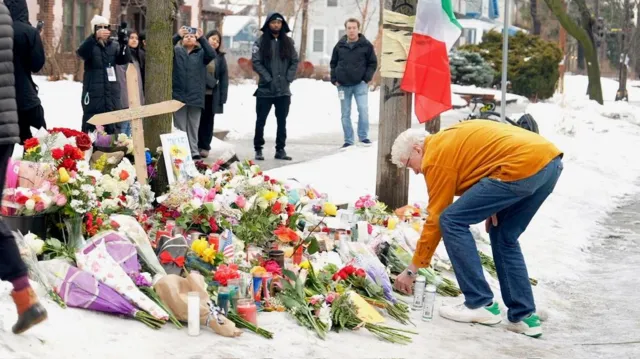
The aftermath saw concerned community members gather to honor Good at the site of the shooting, with vigils and protests popping up across the city, demanding accountability for the shooting.
Protesters and residents expressed their anger over the killing while calling for justice and the need for consequences for lethal actions taken by federal officers.
This incident has further complicated relationships between local authorities and the federal government, raising questions about oversight and jurisdictional authority in such investigations.