
In brief
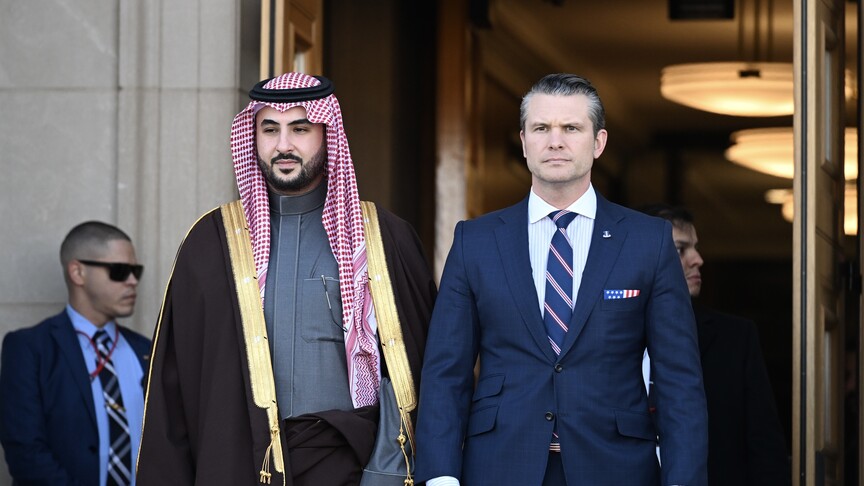
Prince Khalid bin Salman and Pete Hegseth spoke on Monday to review strategic defense cooperation and address the escalating threat from Yemen's Houthi group, which has continued to launch attacks on Saudi airspace and infrastructure. The conversation also focused on efforts to de‑escalate regional hostilities and the broader security situation in the Middle East.
In the early hours of Monday, Riyadh’s Prime Minister and Defense Minister Prince Khalid bin Salman and U.S. Defense Secretary Pete Hegseth carried out a telephone conversation that centered on the heightened threat posed by Yemen’s Houthi militia to Saudi Arabia. The discussion unfolded amid increasing attacks by the Houthis, who have been executing drone and missile strikes against Saudi airports, air defenses and civilian infrastructure in recent months.
Background
The Houthi movement seized the Yemeni capital Sanaa in 2014 and has since controlled large portions of the north, prompting a Saudi‑led coalition to intervene in 2015 to support the internationally recognized Yemeni government. Over the past decade, the coalition has conducted extensive air campaigns against Houthi positions, while the Houthis have escalated their cross‑border operations against Saudi targets. The latest attacks have included missile launches that breached Saudi airspace and bombings that caused civilian casualties.
According to the Anadolu Agency, Prince Khalid noted that the call was intended to review “strategic defence cooperation” between the two countries and to assess the impact of ongoing security developments in the region. The Saudi Press Agency echoed that the discussion “centered on cooperation and the continued attacks by the Houthi militia” and highlighted the importance of de‑escalating tensions that threaten both Saudi Arabia and its allies.
Both officials highlighted the shared goal of countering the Houthi threat, with Prince Khalid explaining that the coalition has intensified airstrikes on Houthi launch sites and that Saudi air defenses have responded to recent missile incursions. Hegseth affirmed the United States’ commitment to supporting Saudi Arabia’s defensive posture and pledged to provide intelligence and technical assistance to mitigate the Houthi threat.
“We also discussed regional and global developments, including efforts to de‑escalate tensions in the region and the continued Houthi terrorist attacks against the Kingdom,”
Prince Khalid said the statement was posted on the U.S. social media platform X, emphasizing the urgency of the situation and the bilateral partnership needed to address it.
The call also touched on larger geopolitical implications. The Saudi‑led coalition’s operations in Yemen have drawn criticism from humanitarian groups citing civilian casualties, while the United States has maintained a policy of limited direct engagement to avoid inflaming regional dynamics. Both leaders underscored the necessity of maintaining regional stability to prevent the conflict from spilling over into neighboring Gulf states.
In addition to addressing the Houthi attacks, the discussion outlined the prospect of joint training exercises to enhance interoperability between Saudi and U.S. forces. The ministers agreed that future drills would focus on joint air defense systems, drone surveillance, and rapid response protocols to counter asymmetric threats.
The conversation concluded with a commitment to regular communication and information sharing. Prince Khalid and Hegseth stated that they would continue to evaluate the evolving security landscape and adjust strategic cooperation accordingly. Both leaders reiterated their stance that the region’s security demands a coordinated approach that aligns military capabilities with diplomatic efforts to bring a lasting resolution to the Yemen conflict.
As the Houthi militia continues to test Saudi defenses, the joint call between Riyadh and Washington underscores a broader effort among Gulf nations and the United States to counter asymmetric attacks that threaten civilian and military targets alike. The ongoing dialogue signals a willingness to strengthen defense ties while confronting an evolving security environment in the Middle East.



