
In brief
The Islamic Revolutionary Guard Corps said it destroyed two U.S. MQM‑170 drones in the Strait of Hormuz, claiming electronic warfare disabled the aircraft. The U.S. military has denied the claim, and the incident follows a series of earlier drone takedowns claimed by Iran. Diplomatic contacts between Tehran and Washington continue, with negotiations passing through Qatari mediators.
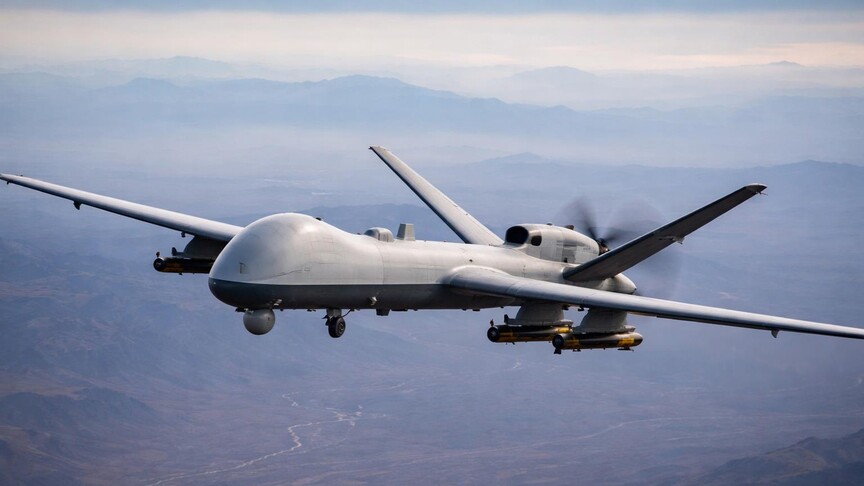
In the waters south of Qeshm Island, the Strait of Hormuz, the Islamic Revolutionary Guard Corps (IRGC) Aerospace Force reported that it had disabled two American MQM‑170 drones with electronic warfare systems on Monday. The claim, published by the semi‑official Tasnim news agency, alleges that the drones were intercepted before completing their missions, bringing the total Iranian‑captured MQM‑170 count to four.
Earlier in the week, the IRGC Navy announced that it had seized a separate MQM‑170 drone over Qeshm Island, and another day before that, an IRGC Aerospace Force unit had brought down a drone with electronic warfare systems over the same island. Those prior incidents are cited as precedent for the latest claim.
The United States military has officially rejected the Iranian account of the latest incident. No corroborating evidence has been provided by Washington, and U.S. officials maintain that no drones were lost in the region.
Iranian Foreign Ministry spokesman Esmaeil Baqaei said that Tehran and Washington were continuing to exchange messages via diplomatic channels, with Deputy Foreign Minister Kazem Gharibabadi visiting Doha to facilitate talks through Qatari mediation. The United States and Israel launched joint attacks against Iran on 28 February, prompting Iranian retaliation against U.S. and Israeli assets in the region. A ceasefire agreement was reached in April, followed by a memorandum of understanding on freedom of navigation in the Strait of Hormuz signed on 18 June. The implementation of that agreement has stalled due to disagreements over security in the strait.
Dramatic Developments on Qeshm Island
Independent reports from Iranian media outlets have described explosions and heightened air defence activity on Qeshm Island coinciding with the alleged drone interceptions. The Iranian outlets report that the blasts were part of a coordinated response to the electronic warfare attempts by the IRGC Aerospace Force. Though no third‑party source has verified the seismic data, the reports add another layer of intensity to the conflict in the western Gulf.
These incidents come as U.S. diplomatic officials in Washington reiterate their stance that no U.S. personnel were harmed and that the drones in question were meant for surveillance missions. The incident is expected to affect the rhetoric of senior Iranian commanders, who have been urging increased defensive measures in the region. The new claim has been cited in Tehran’s media as an example of its growing electronic warfare capabilities.
Behind the scenes, the diplomatic exchanges through Doha remain ongoing. Both sides have agreed to keep a channel open for de‑escalation, even as military posturing continues. The United Nations has not yet issued a statement on the matter, though the Strait of Hormuz remains one of the world’s most vital maritime routes for petroleum transport.
Analysts note that the Iranian capability to electronically jam U.S. drone operations could change strategic calculations in the Gulf. U.S. military officials, however, have stated that they have contingency plans to mitigate electronic interference and that drone operations will continue accordingly. The situation will likely be monitored closely by both regional actors and global powers concerned about the stability of international shipping lanes.
As the United States and Iran remain engaged in a back‑and‑forth diplomatic process, the incident marks the latest escalation after a series of drone claims, reflecting the high level of tension that still persists in the region.
