In brief
Samsung Electronics workers avoid an immediate disruption as the largest union temporarily suspends a planned strike following a last-minute pay agreement. However, the underlying profit-sharing disputes over bonuses related to AI memory chip production indicate ongoing tensions within the company. As negotiations continue, the implications for Samsung's production capabilities and the wider tech supply chain remain critical.
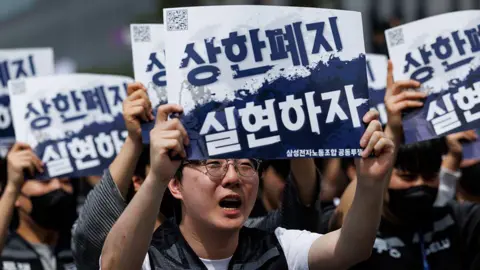
The largest union at Samsung Electronics has suspended a planned strike after reaching a last-minute tentative pay agreement with the South Korean technology giant.
This temporary halt eases fears of disruption at the world's largest memory chipmaker during a boom in building artificial intelligence (AI) data centers.
The union, representing nearly 48,000 workers, announced that industrial action scheduled to begin Thursday will be on hold while members vote on the deal from May 22 to 27.
The dispute primarily revolves around how to fairly distribute profits generated from soaring demand for AI memory chips, with bonuses being a key contentious issue.
Specifically, the conflict centers on disparities in bonuses between workers in memory chip divisions and those in other areas of the company. Samsung had intended to offer substantially larger bonuses to around 27,000 memory chip employees—approximately six times more than those in different business segments, causing unrest among staff creating chips for high-profile clients like Tesla and Nvidia.
Concerns were raised that a strike could severely disrupt production, impacting global supply chains, particularly given Samsung's significance in the industry, accounting for roughly 20% of South Korea's economic output.
Facing burgeoning demand for AI chips, Samsung is also contending with increasing competition from rivals like SK Hynix and Micron. As Samsung's operating profits surged significantly in the early part of the year due to rising AI chip demand, the company stated its commitment to fostering a more conducive labor-management relationship to avert future strike threats.
Although a court granted Samsung an injunction limiting union activities to maintain workplace safety and prevent production disruption, the broader implications of these labor disputes are considerable. The American Chamber of Commerce in Korea noted that disruptions in vital sectors could cause ripple effects throughout the global economy.
As negotiations progress, Samsung faces critical questions about balancing fair compensation and maintaining its competitive edge in a rapidly evolving technological landscape.