In brief
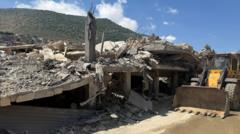
On the night of 13 May 2026, Israel launched a barrage of strikes that hit more than 100 sites associated with Hezbollah in southern and eastern Lebanon. The village of Mashghara suffered the most severe damage, with police recovery teams pulling bodies from collapsed homes, including that of a child. Despite claims that the locations were used by “terrorist activity,” the escalation has drawn sharp criticism from Lebanon and heightened fears that a fragile cease‑fire could be shattered. Israeli officials say the targeted strikes are designed to “eliminate” Hezbollah operatives, while the Lebanese health ministry reports the death toll from Israeli operations since the war began at 3,185 people.
[ { "section": "The Night of Bombardment", "paragraphs": [ "Israel intensified a continuous wave of strikes across rural southern and eastern Lebanon, targeting what it described as Hezbollah infrastructure. The Israeli Defence Forces (IDF) said more than 100 sites were hit amid what it called one of the heaviest nights of bombardment since the cease‑fire agreement began in mid‑April.", "In the Bekaa Valley village of Mashghara, the blasts caused the destruction of several homes. The Lebanese health ministry confirmed that 11 people, including a woman and two children, were recovered from the rubble; an additional 15 people sustained injuries." ] }, { "section": "Political Context", "paragraphs": [ "Prime Minister Benjamin Netanyahu announced that Israel would “press the pedal even harder” against Hezbollah, citing new missile and fiber‑optic drone threats from the Iran‑backed group.", "The statement triggered alarm in Beirut’s southern suburbs, historically pro‑Hezbollah, with residents fleeing the area in a rush of panic. Thousands of cars were seen lining streets as families sought safety." ] }, { "section": "Reactions and Consequences", "paragraphs": [ "The Lebanese National News Agency reported additional strikes in Arab Salim and Kauthariyet El Rez, killing families and leaving homes in ruins. A man and his wife were shot dead in the southern town of Arab Salim, while two more died in Kauthariyet El Rez.", "In the aftermath, Israeli officials released aerial footage showing what they termed “Hezbollah infrastructure sites” where ‘terrorist activity’ was identified. The IDF’s claims of eliminating ‘terrorists’ have been met with skepticism by the Lebanese government." ] }, { "section": "Cease‑fire Tensions", "paragraphs": [ "The cease‑fire that entered effect on 17 April has repeatedly been breached by both sides. Israel’s escalation is partly in response to a recent incident where an Israeli soldier was killed in southern Lebanon, marking the 23rd Israeli casualty in the conflict thus far.", "Lebanon’s health ministry reports that Israeli strikes have killed at least 3,185 civilians since the conflict began in March. Hezbollah has responded with rockets and drone attacks aimed at Israeli installations and civilian communities in northern Israel." ] }, { "section": "Looking Ahead", "paragraphs": [ "The IDF warned of further evacuations across Lebanon as it accuses Hezbollah of violating cease‑fire terms. Meanwhile, Hezbollah’s retaliation includes targeting barracks in northern Israel, framing it as a counter‑strike against Israel’s perceived violations.", "The growing cycle of attack and retaliation threatens to sabotage multilateral mediation efforts aimed at concluding the broader conflict involving the United States, Israel, and Iran." ] } ]