In brief
Recent restrictions on internet access in Russia have led to public protests, as citizens voice their grievances directly to the Kremlin. Reports highlight the impact of these measures on daily life, individual businesses, and social communication as authorities tighten control over cyberspace amid a backdrop of increasing dissatisfaction.
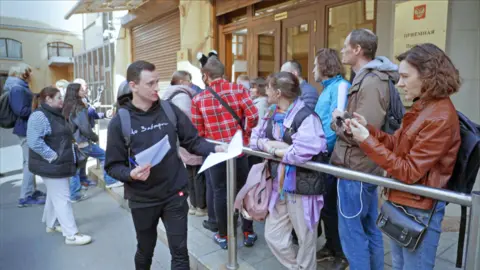
Near the Kremlin, several dozen citizens are queuing outside the presidential administration office, submitting petitions urging President Vladimir Putin to halt the government's crackdown on internet freedoms.
With tightening controls on Russia's cyberspace, including restrictions on global messaging applications and disruptions to mobile internet access, citizens are expressing their grievances in a rare public display of dissent.
While petitioning the president is legal, it can carry significant risks in an authoritarian state, raising concerns among protestors who voice their fear of repercussions. Amid heavy surveillance of the gathering, one petitioner named Yulia expressed her apprehension, stating, I'm shaking. I feel scared.
Putin has acknowledged the internet disruptions, attributing them to safety measures against potential threats, but assures officials to allow essential services to function uninterrupted. Yet many citizens, reliant on digital platforms for everyday tasks, are feeling the adverse effects of these restrictions. Entrepreneurs like Yulia find their businesses struggling as internet access becomes sporadic, directly impacting revenue generation.
Russian authorities assert that limitations on communications are necessary for public safety, but with increasing discontent among the populace, some experts worry about a potential backlash against the government. The sentiment of frustration appears to signify a growing realization of connections between everyday inconveniences and the political climate under Putin.
In a concerning trend, historical parallels are drawn to a "digital Iron Curtain" as Russian officials push for state-approved messaging services that many citizens distrust. As surveillance increases and internet options dwindle, the long-term impacts on civil liberties remain to be seen.
The dialogue surrounding these issues exemplifies the increasing tension between government authority and the desire for internet freedom among Russian citizens, revealing a critical juncture in the nation’s future.