In brief
Vladimir Putin's two-day visit to India marks a significant moment in the bilateral relations between Moscow and New Delhi. Amid rising tensions with the West, particularly regarding India's oil purchases from Russia, both leaders are expected to discuss expanding trade deals and defense cooperation. The visit underscores the complexities of India's strategic autonomy as it navigates relationships with both Russia and the United States, particularly in light of historical allies stepping back under pressure.
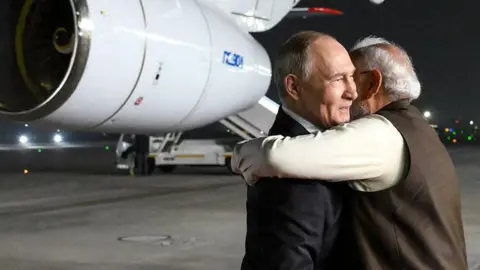
Russian President Vladimir Putin has arrived for a two-day visit to India, where he was warmly welcomed by Prime Minister Narendra Modi ahead of their annual summit. During this critical meeting, Delhi and Moscow are expected to finalize a series of significant agreements, particularly in the energy and defense sectors.
The backdrop to this meeting is colored by recent U.S. pressure on India to curb its Russian oil imports, which have surged to account for 35% of India's crude oil purchases since the start of the Ukraine conflict. This marked increase from a mere 2.5% before the war demonstrates India's reliance on Russian energy at discounted rates while the West imposes sanctions on Kremlin sources.
Putin's visit is also a display of Russia's strategic partnerships as it seeks to counteract perceived isolation due to the war in Ukraine. For Modi, the visit provides a stage to reaffirm India's long-lasting alliance with Russia, emphasizing his diplomacy that maintains ties with Moscow while balancing relationships with Western powers.
As both nations pursue a “special and privileged strategic partnership,” discussions will focus not only on continued oil transactions but will likely include significant military sales, including India’s interest in advanced aircraft and missile systems from Russia, vital for modernizing its defense capabilities.
In light of the shifting geopolitical atmosphere, Modi faces the challenge of reinforcing India's partnerships without alienating Western allies. The hope is to enhance trade relations that have historically lagged despite a recent increase in bilateral trade figures, which-rocketed from $8.1 billion in 2020 to $68.72 billion by March 2025.
As the global landscape evolves, Modi's handling of this diplomatic tightrope will be closely watched, balancing India's reliance on Russian energy and arms while addressing the concerns from Western nations about Russia's ongoing conflicts.