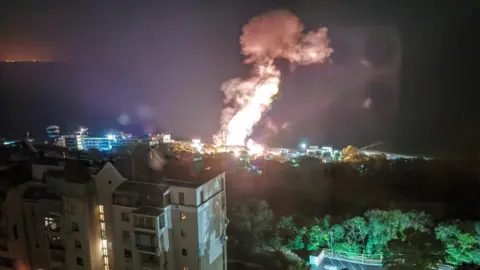
From Mariia's 16th-floor flat, the calm waters of the Black Sea stretch out into the horizon beneath the fading twilight.
Up here you can see and hear when the drones come, she says, standing by a wall-length, floor-to-ceiling window. When they hit buildings and homes in the city of Odesa down below we see all the fires too.
Her daughter Eva, who is nine, has learned the shapes and sounds of the objects that zoom through the sky on a daily basis. She proudly shows off a list of social media channels she checks when the air raid alerts go off.
She knows whether what's coming is a risk or a threat, and that calms her down, her father Sergii says.
There is scarcely a place in Ukraine that has not been targeted since Russia launched its full-scale invasion nearly four years ago.
But in recent weeks Odesa – Ukraine's third largest city – has come under sustained attack. Through strikes on port and energy infrastructure, Russia is trying to cripple the region's economy and dent the population's morale.
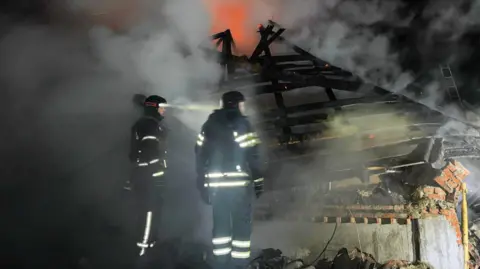
As the strikes surge, air sirens go off frequently, but not everyone heeds them. Standing in front of a destroyed gym the morning after an overnight drone strike that injured seven people, Maryna Averina of the State Emergency Service concedes people have become very careless about their own safety.
In December, almost a million people in Odesa were left with no power. We were among the first regions to experience what it means to go through the winter period without electricity and without heating, says Oleh Kiper.
A month later, as temperatures hover around -1C, the supply remains severely disrupted. Residents are making desperate adjustments, such as investing in costly generators to sustain daily life amidst the chaos.
The ongoing struggle reflects not only the physical challenges but also the psychological weight of living continuously under threat, as families consider the possibility of again leaving their homes behind for safety.