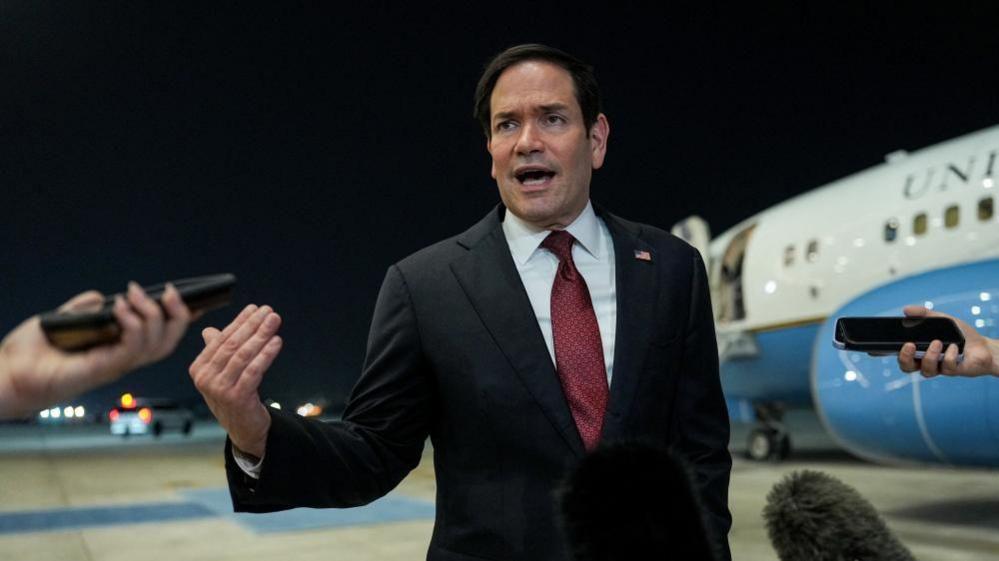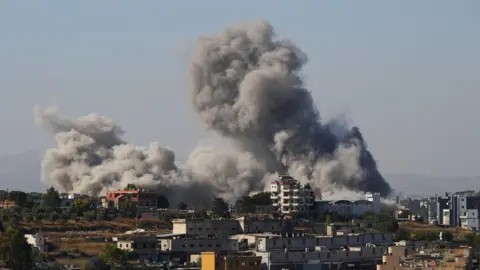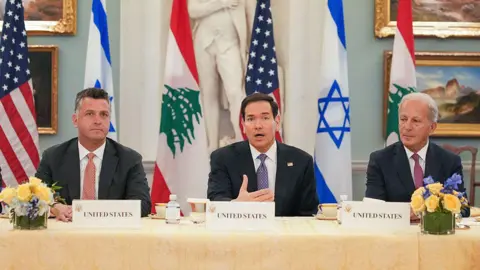
Lebanon and Israel have held their first diplomatic talks in over three decades, a rare encounter aimed at ending fighting between Israel and the Iran-backed Hezbollah group. US Secretary of State Marco Rubio, who mediated, described the meeting as a 'historic opportunity' to curb Hezbollah's influence. A statement from the US revealed that the two sides have agreed to commence direct negotiations, with specifics yet to be determined.
Israel's objective in these discussions is to disarm all non-state terror groups, focusing particularly on Hezbollah. In contrast, the Lebanese delegation has advocated for a ceasefire and measures to cope with a dire humanitarian situation. The two nations have no diplomatic relations, and this is the first high-level dialogue since 1993.
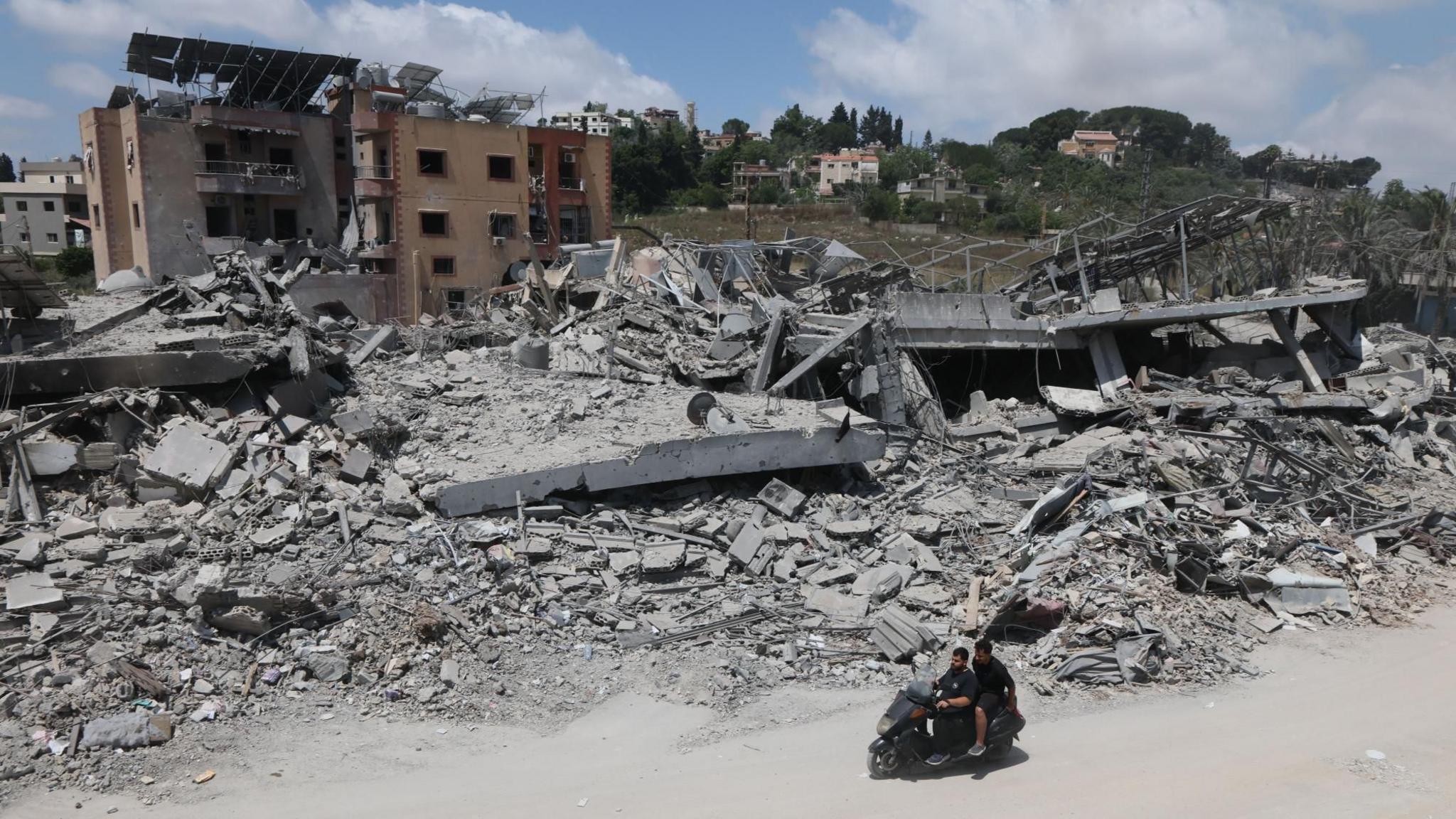
As violence escalates, over 2,000 casualties have been reported since Israeli military operations in Lebanon recommenced on March 2, coinciding with US and Israeli strikes in Iran. While talks unfolded in Washington, Hezbollah claimed responsibility for at least 24 attacks on Israeli forces, and alarm sirens were triggered in numerous northern Israeli communities throughout the day.
Israel asserts that its military actions in Lebanon target the disarmament of Hezbollah, an organization it has clashed with previously during the earlier conflict periods in 2023 and 2024. The US State Department spokesman confirmed both nations agreed to work toward reducing Hezbollah's presence, while Lebanon stressed the need for a ceasefire and humanitarian relief measures.
The Lebanese government, however, is faced with limited ability to confront Hezbollah, which holds substantial influence over the southern regions of Lebanon and is integral to the current government's structure. In a broader context, Iranian negotiators have insisted that Lebanon be part of any ceasefire discussions, although the US and Israel disagree on this inclusion.
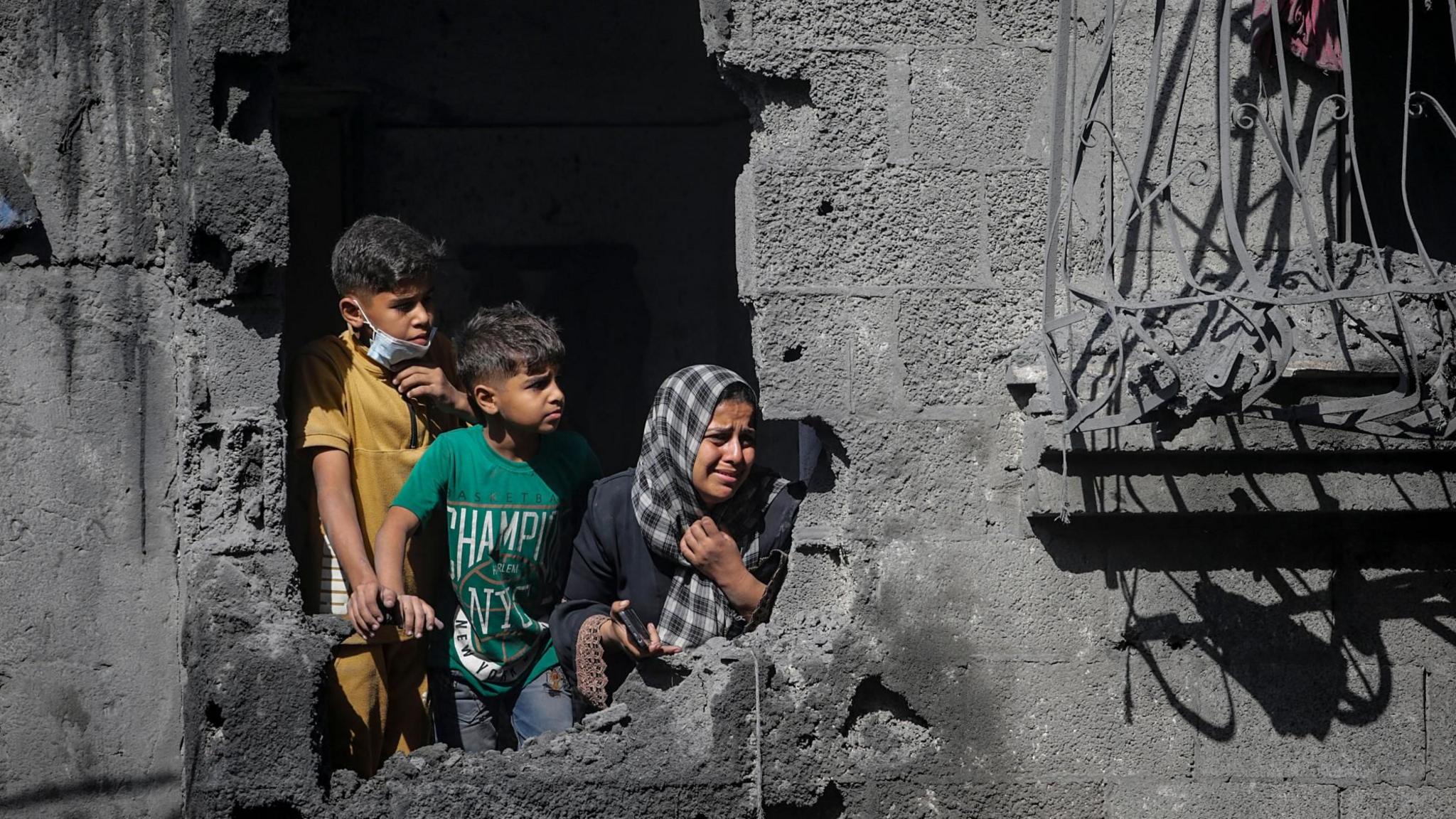
The ongoing humanitarian crisis has led to a million displaced individuals since hostilities reignited, raising significant concerns among the international community as the situation develops.
Israel's objective in these discussions is to disarm all non-state terror groups, focusing particularly on Hezbollah. In contrast, the Lebanese delegation has advocated for a ceasefire and measures to cope with a dire humanitarian situation. The two nations have no diplomatic relations, and this is the first high-level dialogue since 1993.
As violence escalates, over 2,000 casualties have been reported since Israeli military operations in Lebanon recommenced on March 2, coinciding with US and Israeli strikes in Iran. While talks unfolded in Washington, Hezbollah claimed responsibility for at least 24 attacks on Israeli forces, and alarm sirens were triggered in numerous northern Israeli communities throughout the day.
Israel asserts that its military actions in Lebanon target the disarmament of Hezbollah, an organization it has clashed with previously during the earlier conflict periods in 2023 and 2024. The US State Department spokesman confirmed both nations agreed to work toward reducing Hezbollah's presence, while Lebanon stressed the need for a ceasefire and humanitarian relief measures.
The Lebanese government, however, is faced with limited ability to confront Hezbollah, which holds substantial influence over the southern regions of Lebanon and is integral to the current government's structure. In a broader context, Iranian negotiators have insisted that Lebanon be part of any ceasefire discussions, although the US and Israel disagree on this inclusion.
The ongoing humanitarian crisis has led to a million displaced individuals since hostilities reignited, raising significant concerns among the international community as the situation develops.