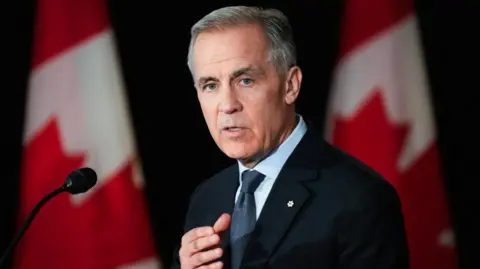
Canadian Prime Minister Mark Carney's Liberals could soon have a slim majority in the House of Commons if the party is able to make gains in three by-elections being held on Monday. The outcome of the races—two in the Toronto area and one near Montreal—could solidify his hold on power, staving off a federal election until as late as 2029 and giving his party the ability to pass legislation without relying on support from opposition benches.
Liberals currently hold 171 of the 343 seats in the House, one shy of a technical majority. The likely power shift comes a year after Carney became prime minister and follows a series of defections by opposition members of parliament to the Liberals. The Liberals are widely expected to win the two Toronto ridings, Scarborough Southwest and University-Rosedale, previously held by former defence minister Bill Blair and Chrystia Freeland.
The race in Terrebonne, a Montreal suburb, is considered a toss-up between the Liberals and the Bloc Quebecois. The Liberal candidate secured a narrow win by a single vote in last year's federal election, a result that was later nullified due to a clerical error by Elections Canada.
Wins in Toronto will be sufficient for Carney to clinch a narrow majority. Meanwhile, the recent influx of defectors from opposition ranks—four former Conservatives and one New Democrat—has sparked significant discussions in political circles. Political science experts suggest that while the changing landscape strengthens the Liberals, it may also result in a lack of ideological coherence within the party, as various factions join under the Liberal banner.
With polls indicating a favorable position for the Liberals, Carney's approach seems to attract members from the conservative side of the spectrum. The opportunity to govern with a comfortable majority remains a key objective as Canada navigates several pressing national issues.
Liberals currently hold 171 of the 343 seats in the House, one shy of a technical majority. The likely power shift comes a year after Carney became prime minister and follows a series of defections by opposition members of parliament to the Liberals. The Liberals are widely expected to win the two Toronto ridings, Scarborough Southwest and University-Rosedale, previously held by former defence minister Bill Blair and Chrystia Freeland.
The race in Terrebonne, a Montreal suburb, is considered a toss-up between the Liberals and the Bloc Quebecois. The Liberal candidate secured a narrow win by a single vote in last year's federal election, a result that was later nullified due to a clerical error by Elections Canada.
Wins in Toronto will be sufficient for Carney to clinch a narrow majority. Meanwhile, the recent influx of defectors from opposition ranks—four former Conservatives and one New Democrat—has sparked significant discussions in political circles. Political science experts suggest that while the changing landscape strengthens the Liberals, it may also result in a lack of ideological coherence within the party, as various factions join under the Liberal banner.
With polls indicating a favorable position for the Liberals, Carney's approach seems to attract members from the conservative side of the spectrum. The opportunity to govern with a comfortable majority remains a key objective as Canada navigates several pressing national issues.