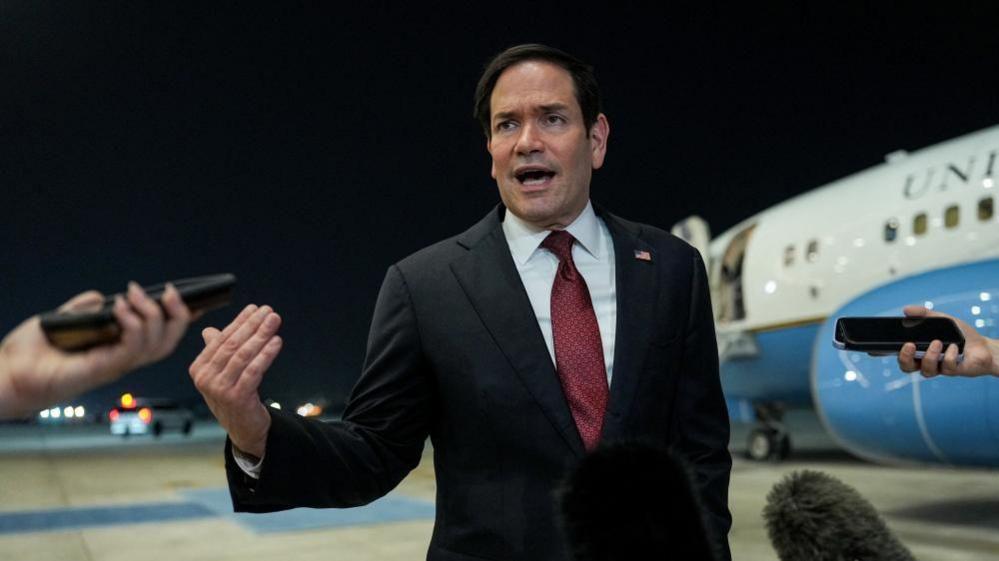
In a striking development, U.S. President Donald Trump has withdrawn an invitation for Canada to join his newly formed Board of Peace, highlighting escalating tensions between the North American allies.
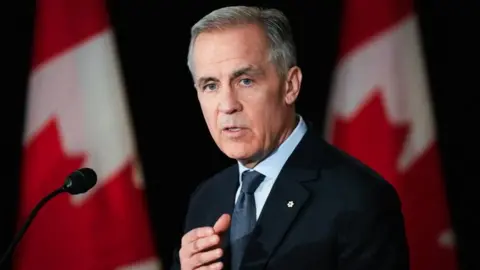
On Truth Social, Trump stated, Please let this Letter serve to represent that the Board of Peace is withdrawing its invitation to you regarding Canada's joining, addressing Prime Minister Mark Carney directly.
The move comes as Carney warned of a potential rupture in the U.S.-led global order, signaling Canada's concerns about the implications of joining the board, which entails a hefty membership fee of $1 billion (£740 million).
This Board of Peace, described as an international organization aimed at resolving conflicts, appears to be underpinned by Trump's sweeping executive authority as its chairman. While initially conceived to address the U.S.-Israel conflict and oversee reconstruction efforts post-war, its broader goals and membership structure have come under scrutiny.
Interestingly, Trump's communication did not clarify the reasons behind revoking the invitation. Carney's office has not reacted immediately, despite indications that he was prepared to accept the invitation on principle.
The Board of Peace has reportedly attracted interest from around 60 countries, with about 35 nations signing up, though major permanent members of the UN Security Council—including China, France, Russia, and the UK—have not committed so far.
This week's political tug-of-war intensified following Carney's impactful speech at the World Economic Forum in Davos, where he emphasized solidarity among middle powers against economic coercion. Trump's response included an assertion that Canada benefits significantly from its relationship with the U.S., adding tension to their diplomatic exchanges.
As Canada grapples with its place in this evolving narrative, it remains to be seen how the government's position on international alliances will shape future diplomatic relations with the U.S. and beyond.