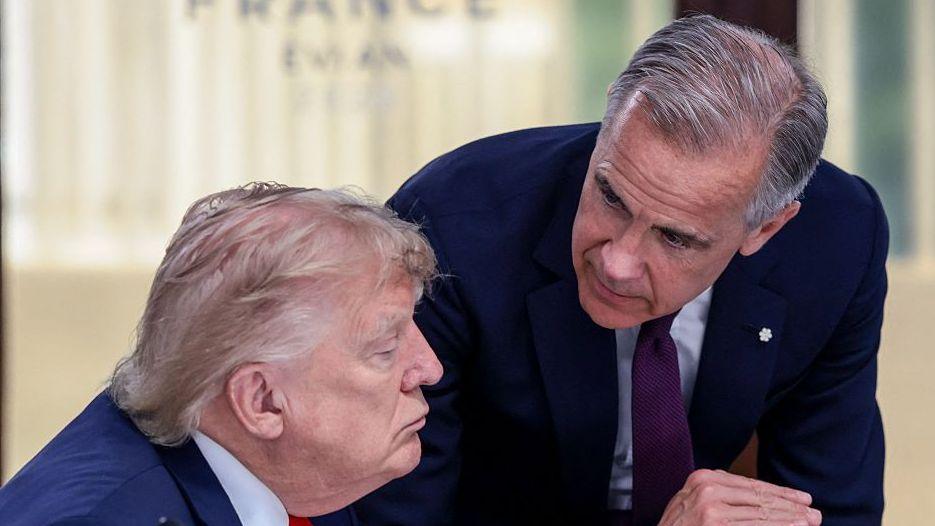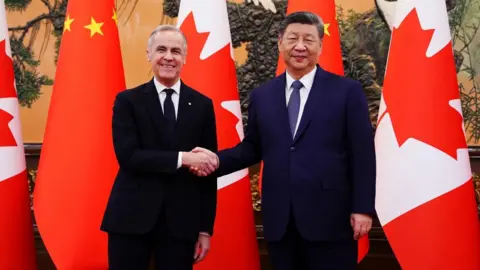
Chinese leader Xi Jinping and Canadian PM Mark Carney have announced lower tariffs, signalling a reset in their countries' relationship after a key meeting in Beijing.
China is expected to lower levies on Canadian canola oil from 85% to 15% by 1 March, while Ottawa has agreed to tax Chinese electric vehicles at the most-favoured-nation rate, 6.1%, Carney told reporters.
The deal is a breakthrough after years of strained ties and tit-for-tat levies. Xi hailed the turnaround in their relationship but it is also a win for Carney, the first Canadian leader to visit China in nearly a decade.
He has been trying to diversify Canadian trade away from the US, his country’s biggest trading partner, following the uncertainty caused by Trump’s on-again-off-again tariffs.
The deal could also see more Chinese investments in Canada, right on America's doorstep.
Carney himself seemed to allude to the fact that this was a result of Trump's tariffs, which have now pushed one of the US's key allies towards its biggest rival.
He told reporters that Canada’s relationship with China had been more predictable in recent months and that he found talks with Beijing realistic and respectful.
He clarified that Ottawa does not agree with Beijing on everything, noting that he made Canada’s red lines clear during discussions, including human rights and concerns over election interference.
Observers believe Carney's visit could set an example for other countries across the world who are also feeling the pain from Washington's tariffs.
In contrast, Xi has been trying to show that China is a stable global partner and has been urging more pragmatic ties - in the words of Beijing, 'a win-win' for all.
It seems to be working; both the South Korean president and the Irish prime minister have recently visited Beijing, with the UK and German leaders expected to follow suit.
Carney stated that the world has changed dramatically and how Canada positions itself will shape its future for decades.
Earlier in his visit, he described the Canada-China partnership as a setup for a 'new world order', emphasizing the challenges posed by an eroded multilateral system.
As discussions occurred in the Great Hall of the People, Xi stated, 'The healthy and stable development of China-Canada relations is conducive to world peace, stability, development, and prosperity.'