On Monday evening, the air in Ndumberi, a village near Nairobi, was as quiet as a typical night, until an unforeseen tragedy shattered it. Twelve-year-old Bridgit Njoki, nestled in her family's modest home, was watching television, oblivious to the chaos of anti-government protests happening just a few kilometers away. Suddenly, a single bullet crashed through the roof, striking her in the head. Tragically, Njoki was pronounced dead shortly after being admitted to the hospital.
Her mother, Lucy Ngugi, struggled to maintain her composure while recounting the harrowing moment. "She was my everything," she told a BBC correspondent, her sorrow echoing in her words. Lucy's plea for other mothers to be spared such heartbreak reflects the collective grief sweeping through a nation where violence has taken a toll on many innocent lives.
As reported by the Kenya National Commission on Human Rights (KNCHR), nearly 70 individuals have lost their lives, and hundreds have sustained injuries in the protests since June 17, primarily fueled by deep-rooted frustration over mounting living costs, taxation, public debt, and police brutality.
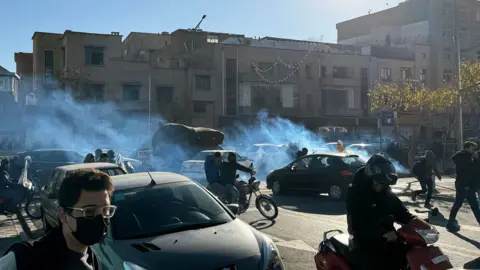
On the ill-fated day of July 7, when Njoki lost her life, authorities had heightened security measures by barricading major roads in anticipation of unrest. Videos from the protests depicted police deploying tear gas and live ammunition in urban areas where demonstrators had gathered. Njoki's grandmother, Margaret Njeri, described the chaos surrounding her granddaughter's death, emphasizing the loud bang and her immediate belief that it was a bullet.
Despite the family's assertions, police dismissed claims of the bullet originating from the nearby road, suggesting it was implausible for a bullet to reach their dwelling. However, a post-mortem examination confirmed that a bullet was indeed retrieved from Njoki's head, a stark reminder of the violence that engulfed her community.
Njoki, a promising Grade 7 student at a local school, was adored for her intelligence and humility. Her family spoke highly of her kindness, describing her as the caretaker of the household who loved helping others. Her spirit shone through in her commitment to her education and her church community.
Devastated, her parents voice their anguish, particularly her father, who remains too heartbroken to speak. Immense grief is palpable in their home, where Njoki’s absence has left a profound void—her empty chair a reminder of the life cut short.
The slain child’s death has attracted international attention, leading to condemnation of the Kenyan police’s use of heavy-handed tactics against civilians. In a nation that has previously witnessed similar tragedies, the UN cautioned against the continued use of lethal force in law enforcement.
In response to the protests, President William Ruto has adopted a stark approach, vowing to enforce tough penalties against demonstrators who engage in violence. This hardline stance has sparked a volatile political climate, with accusations of incitement from political adversaries.
Amidst the sorrowful backdrop of mounting casualties, Njoki's family implores an end to the cycle of violence. "We are calling for love, dialogue, and understanding," Lucy Ngugi expressed with heartfelt urgency, hoping that no other mother will endure such a devastating loss. The call for justice rings out as Njoki's tragic story becomes synonymous with the struggle for accountability and humane governance in Kenya.