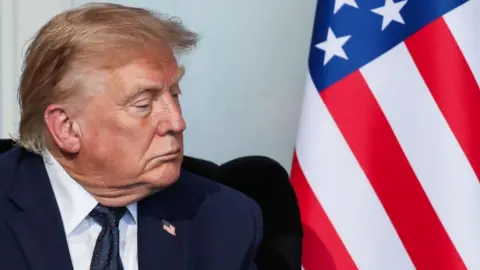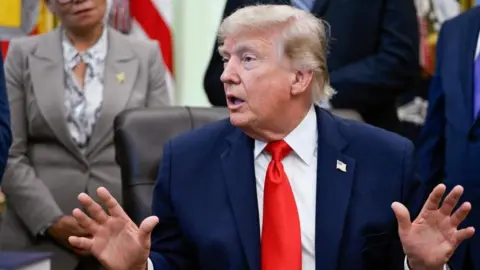
European leaders are expressing cautious optimism after a virtual meeting with Donald Trump on Wednesday, just two days before his anticipated talks with Russian President Vladimir Putin in Alaska focused on resolving the ongoing conflict in Ukraine. Trump reportedly emphasized his aim for the summit was to achieve a ceasefire between Moscow and Kyiv. Moreover, any territorial disputes must involve Ukrainian President Volodymyr Zelensky, with necessary security assurances included in any agreement, as noted by France's President Emmanuel Macron.
The meeting provided European leaders the opportunity to clarify their expectations, with Macron stating that speaking to Trump allowed for a valuable exchange of intentions. Trump and Vice-President JD Vance engaged with a coalition of leaders from the UK, France, Germany, Italy, Finland, Poland, as well as EU chief Ursula von der Leyen and NATO head Mark Rutte.
In London, UK Prime Minister Sir Keir Starmer is set for discussions with Zelensky at No 10 Downing Street, a day prior to the Trump-Putin summit. This call to Trump highlights the concerns of European leaders being excluded from the quickly arranged meeting in Alaska, pushing to keep Ukraine's interests and European security central to the discussions.
While Trump rated the call as "a 10," he warned of "very severe" repercussions for Russia if it doesn't cease its military actions in Ukraine. He suggested the possibility of a quick follow-up meeting involving both Putin and Zelensky if the initial discussions go well. Nonetheless, European leaders stressed the importance of Ukraine’s role in any final agreements, fearing possible concessions to Russia.
Poland's Donald Tusk pointed out the necessity for Europe to convince Trump of the unreliability of Russia. German Chancellor Friedrich Merz reiterated the importance of Ukraine being part of any further negotiations. The leaders warned that if the Russian delegation refuses to negotiate fairly, the US and Europe must intensify their pressure on Moscow.
Concerns are mounting over Trump’s previous statements hinting at possible "land-swapping" between Kyiv and Moscow, as Russian officials maintain their hardline stance on negotiations. The broader implications of Putin’s demands, which include Ukraine relinquishing control of several strategically important regions and abandoning attempts to join NATO, remain contentious.
Amid these geopolitical tensions, the Ukrainian president remains concerned that Russia will utilize any territorial gains as a launching pad for more conflict in the future. Ukrainian President Zelensky has urged allies for increased pressure on Russia, underscoring the challenges in achieving a potential ceasefire.
As Russia continues its military onslaught in areas like Donetsk, Zelensky reiterated the need for stronger pressures against Russia. The reality remains that even face-to-face talks with Putin may not deter his violent actions, according to Trump. Meanwhile, efforts to establish a "Coalition of the Willing" by the UK and France aims to solidify support against further Russian aggression in Ukraine, with plans for a reassurance force still in development.
The meeting provided European leaders the opportunity to clarify their expectations, with Macron stating that speaking to Trump allowed for a valuable exchange of intentions. Trump and Vice-President JD Vance engaged with a coalition of leaders from the UK, France, Germany, Italy, Finland, Poland, as well as EU chief Ursula von der Leyen and NATO head Mark Rutte.
In London, UK Prime Minister Sir Keir Starmer is set for discussions with Zelensky at No 10 Downing Street, a day prior to the Trump-Putin summit. This call to Trump highlights the concerns of European leaders being excluded from the quickly arranged meeting in Alaska, pushing to keep Ukraine's interests and European security central to the discussions.
While Trump rated the call as "a 10," he warned of "very severe" repercussions for Russia if it doesn't cease its military actions in Ukraine. He suggested the possibility of a quick follow-up meeting involving both Putin and Zelensky if the initial discussions go well. Nonetheless, European leaders stressed the importance of Ukraine’s role in any final agreements, fearing possible concessions to Russia.
Poland's Donald Tusk pointed out the necessity for Europe to convince Trump of the unreliability of Russia. German Chancellor Friedrich Merz reiterated the importance of Ukraine being part of any further negotiations. The leaders warned that if the Russian delegation refuses to negotiate fairly, the US and Europe must intensify their pressure on Moscow.
Concerns are mounting over Trump’s previous statements hinting at possible "land-swapping" between Kyiv and Moscow, as Russian officials maintain their hardline stance on negotiations. The broader implications of Putin’s demands, which include Ukraine relinquishing control of several strategically important regions and abandoning attempts to join NATO, remain contentious.
Amid these geopolitical tensions, the Ukrainian president remains concerned that Russia will utilize any territorial gains as a launching pad for more conflict in the future. Ukrainian President Zelensky has urged allies for increased pressure on Russia, underscoring the challenges in achieving a potential ceasefire.
As Russia continues its military onslaught in areas like Donetsk, Zelensky reiterated the need for stronger pressures against Russia. The reality remains that even face-to-face talks with Putin may not deter his violent actions, according to Trump. Meanwhile, efforts to establish a "Coalition of the Willing" by the UK and France aims to solidify support against further Russian aggression in Ukraine, with plans for a reassurance force still in development.