Families turn to AI to resurrect lost soldiers – a new grief ritual
Across Russia, the war in Ukraine has left thousands of families bereft of loved ones. In the wake of these losses, some recipients of the grief crisis are turning to AI to make the dead appear once more, hoping to find a sense of closure.
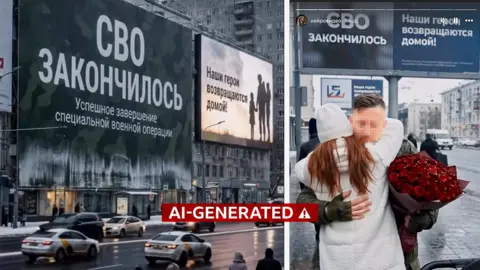
The first video to capture worldwide attention appeared on Instagram on 9 June, when a popular blogger, known online as Katya Jin, posted a 15‑second clip that shows a man in military uniform embracing a woman and levitating onto a sky‑filled staircase. A title card reads, “The Special Military Operation is over / Our heroes are coming home.” The present‑day hero’s face is a convincing digital reconstruction based on photographs of his spouse.
The video, which relies on generative‑adversarial networks and motion‑capture techniques, has since spread to TikTok, garnering more than a million views. Its impact on viewers has divided online platforms: some comment with tears of relief, while others recoil from the “deep‑fake” that records a dead soldier’s smile.
The cost of a digital afterlife
Create‑to‑order AI videos are sold to grieving relatives for between 200 roubles (£2) and 10,000 roubles (£100). The production process is short, and the best‑quality work can earn creators up to a hundred thousand roubles a month – roughly twice the average Russian wage.
At the heart of the trend is a belief that a photographed likeness can be animated if the right prompt is supplied. The result is a short film of a soldier’s corpse or a “ghost” in an angelic embrace – an act that many families say helps them feel closer to those lost.
Ethical questions rise as technology spreads
Researchers note that the tools behind these videos are powerful but also fraught with ambiguity. Katarzyna Nowaczyk‑Basińska, a Cambridge researcher, argues that “creating dead‑bots of Russian soldiers is ethically complex and difficult to evaluate cleanly.” She warns that while the content may soothe some, it may deepen others’ pain.
In Russia, very few official casualty figures exist; the BBC and Russia’s Mediazona have confirmed at least 225,000 soldier deaths – a number that could be far higher. The videos often omit reference to the destruction of Ukraine, presenting a sanitized, heroic image that many Ukrainians find inane and offensive.
“You should be ashamed to show your ‘heroes’ who went to earn blood money by killing our children.” – anonymous Ukrainian.
With the explosion of commercial scripts that guide users on how to generate such content, the industry has become a profitable niche for a handful of creators. Yet complaints abound: some clients say the copies did little to ease their sorrow, describing them as “an illusion.”
Other families claim a newfound sense of “dynamic connection,” even if the illusion is purely virtual. An unnamed Russian woman declared, “Thank you, AI, for this opportunity to be with my loved one. Soon, it will be two years since you’ve been gone.”
Analysts note that this trend belongs to a larger global push for “digital afterlives.” In museums, courtrooms and political campaigns, posthumous avatars are already appearing. When violence and death dominate public consciousness, the technology’s appeal grows, but the hard question remains: does it heal or harm?
Whether the use of AI to simulate a vanished loved one constitutes a merciful comfort or an ethically dubious exploitation will likely be resolved only over time as society digests the new reality of virtual remembrance.