In brief
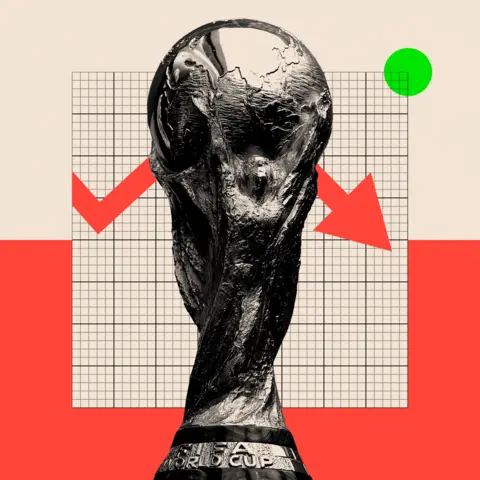
The 2026 World Cup will feature political drama as the U.S. hosts clash with rivals in a war‑torn region while the U.S., Canada and Mexico renegotiate the USMCA trade agreement during the event. The tournament is set to use dynamic pricing and stadium‑renaming deals borrowed from American football to raise record‑setting revenues, eclipsing the $929 m at Qatar 2022. Fans will face steep ticket prices—often five‑figure sums for final matches—while the stadiums and cities will endure new transport costs and try to fill seats. The financial model may shift the world's football economy, sending funds to FIFA's global development programme but leaving host cities struggling to recoup costs. The article highlights how the U.S. president’s focus on the event, Trump’s war on Iran, and the political gamble of hosting in existing NFL stadiums could impact the global football economy as the tournament employs a high‑price strategy, a controversial resale market and a K‑shaped income split that benefits the richest 10%, while smaller nations may receive aid through FIFA’s equal‑distribution fund.
The 2026 World Cup is set on the backdrop of complex geopolitical tensions: the United States, Mexico and Canada, three co‑hosts, are embroiled in a trade war that could see USMCA renegotiated during the event itself.
In an unprecedented blend of politics and sport, the US president Donald Trump will focus intently on the tournament, seized from his return to the White House, joking that his 2020 election loss helped him secure the 2028 Los Angeles Olympics.
Trump’s stance on the Israel‑Iran tensions and dynamic changes to the tournament’s security and transport, such as a tenfold hike in New Jersey commuter trains, raise questions about the political stakes tied to the World Cup.
FIFA’s new ticketing model will rely on dynamic pricing borrowed from the NFL; tickets that once cost under ten dollars could skyrocket to five‑figure sums for finals and high‑profile group games.
Despite the high ticket prices, the revenue is projected to exceed $7 bn, potentially outpacing the 2021 UNO’s core budget, and funneled into FIFA’s global development funds which have historically helped small nations like Cape Verde secure qualification.
However, the model faces backlash: resale prices fell 64% for some low‑demand matches on FIFA’s own platform, while several host cities argue that ticket income will not recover the costs of stadiums and transportation upgrades, leaving a financial imbalance between FIFA and local governments.
Critics also worry that the high price tags may dilute the fan experience that celebrated Jock Stein, who said “football is nothing without the fans.” Some smaller nations may benefit financially, yet the richer top 10% of consumers will pull the bulk of ticket revenue under a K‑shaped economy.
In conclusion, the 2026 World Cup presents a testing ground for a high‑state ticketing experiment that could redefine the global football economy, while political tensions may add to the volatility and uncertainty of the event.