In brief
In a region where fighting has turned from insurgency to a brutal crackdown, the military’s new forced‑conscription policy is reshaping the front lines. Four young men, whose only crimes were being caught on the street, have been turned into soldiers and sent into the jungle battles of Karen state. Their stories reveal a harsh reality: civilians are being drafted into armed conflict against their will, while the armed forces gain a steady flow of manpower. At the same time, rebel fighters of the People’s Defence Force struggle with shortages of ammunition and equipment, yet they hold out for the future, dreaming of a free Myanmar. The future of the war hinges on who can win the trust of the population.
In recent months, Myanmar’s civilian population has become an unwelcome source of soldiers for the junta’s army. As the military tightened forced conscription laws in 2024, young men in Bago and Karen states were seized from street, work or even singing a karaoke tune and made to sign up for service with no choice of their own. Four of these men—aged 19 to 25—were sent to a remote jungle camp that became the front line of a war they did not wish to fight.
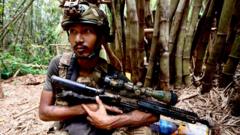
Their experience in the tent of the People's Defence Force (PDF) is one of forced marches, basic training, weapon shortages and a hard wind. The men complained of the lack of rest, the unequal burden of work, and the small amount of protection against the army’s artillery and air strikes. One admitted that he had been drug‑slipped in his shoe and framed for crime, another was dragged away from a late night karaoke session. They do not remember why they were armed. That is the reality of the forced conscription policy—an unwilling soldier cup full of fear but a powerful tool for the army’s manpower advantage.
Fran¶k commander Ko Kaung explained that the new conscription has become a “main challenging factor for us” on the battlefield. He said that because the army is now able to recruit a large number of mandatory soldiers, even 19‑year‑old conscripts can be used as troops with minimal oversight. Over the past year the army has reclaiming towns such as Hpapun and tightening control over the road through Mandalay to Myitkyina. They are also deploying drones in increasing numbers, and stop‑by drones have become a staple of the air‑strike campaign.
Local enemy forces, however, continue to hold out and fight the regime in the border areas. The PDF commander Da Wa, who speaks about the changing conditions of combat, says that the troops “are getting better at following orders.” The army’s technological edge—particularly the delivery of unmanned aircraft—makes their advantage hard to beat.
The field hospital on the side of the rebellion, kept alive by a doctor with 19 years of army training, runs on solar power and a dwindling stock of supplies. It is a stark reminder of the many human casualties that the war has inflicted on civilians. An injured rebel commander publicly displayed a video of his wounded leg after stepping on a landmine; he later vowed to return to war in spite of his injuries.
Meanwhile, the brother‑sister pair of a couple from the rebellion give birth to a baby, hoping for a future free of oppression. The infant’s name, Sue Paye, is a vow to a better World. The couple’s desire for a free, democratic Myanmar ties the war to the hope of a better tomorrow.
The forced conscription policy is, therefore, not just a war strategy; it is a turning point in Myanmar’s fight for political control. The story of these four men offers a stark, human window onto how the war is changing each day and how a population that once sided with democratic ideals now must fight and die for an uncertain future.