In brief
After a routine check at Walter Reed, President Trump’s physician reported him in 'excellent health' but urged more exercise and weight loss. With Biden’s age having sparked a national fertility debate and historical precedent for doctor‑releases, the politicised nature of presidential health checks and their impact on public trust are examined.
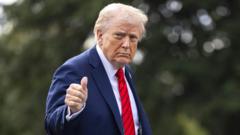
On a crisp November morning, President Donald J. Trump stepped out of the Walter Reed National Military Medical Center wearing a grin and a new set of “vital statistics” that would soon be broadcast to a nation obsessed with the fitness of its leader. A memo released by his personal physician announced that the 68‑year‑old was in “excellent health,” with “strong cardiac, pulmonary, neurological and overall physical function” and fully capable of “carrying out all duties of Commander‑in‑Chief.” The doctor advised him to “exercise more and lose weight,” while noting his long‑term abstinence from tobacco and alcohol.The President’s doctor also shrugged the swelling on his right hand – probably the souvenir of shaking countless hands at public events – as “minor soft‑tissue irritation” due to his frequent handshakes and aspirin‑induced cardiovascular protection. Trump, in turn, posted a brief statement on his Truth Social account reading, “everything checked out perfectly.” The message was clear: the physical had gone smoothly, but his age‑age was forever in the news.### How Health Checks Became a PR PlayIn the days before television, a president’s medical condition could stay hidden behind the curtain of secrecy. Woodrow Wilson’s 1919 stroke, for instance, was largely covered up by White House physicians, effectively allowing his wife, Edith, to wield the nation’s executive powers for the rest of his term. FDR’s winter polio required wheelchair use that was downplayed until after his death.It was during Lyndon B. Johnson’s Cold War presidency that the White House began to release medical reports. By Gerald Ford’s tenure in the 1970s, the president made a point of sharing select details—his swimming routine, for instance—after a routine check‑up. The practice evolved as a political tool: a healthy headline could translate into an image of vigor, crucial to garnering public confidence.Dr. Matt Dallek, a political historian at George Washington University, notes that “Americans have always looked for a vigorous, masculine president.” In this sense, the annual physical is less about medical transparency and more about projecting power.### Why Age Matters NowThe country has turned its focus toward an unprecedented age‑range in executive office. Bill Clinton presided at 46, George W. Bush at 54, Barack Obama at 47, while Trump and Biden were 70 and 78, respectively, at the time of their first elections. The racial makeup of the interrogation the President faced: a living “fight against the natural decline” as well as pressure from foreign intelligence agencies, became “turbocharged” by the American public’s curiosity.“In the partisan era, vulnerability is a liability,” says Jacob Appel, a medical ethicist at Mount Sinai. “What’s revealed is carefully curated, and what is not revealed can be equally threatening to national security.” In a 2024 campaign, doubts about Biden’s fitness culminated in his withdrawal from the race, while Trump’s supporters blamed alleged white‑wash tactics by a former administration over Biden’s “mental decline.”### Public Perception and the Role of PollsBefore the most recent physical, pollsters were already tracking Americans’ anxiety over the non‑executive president’s health. A Washington Post‑ABC‑Ipsos survey released in May 2024 found that 59 % of respondents believed Trump lacked the mental capacity for office, and 55 % doubted his physical ability to serve. An Economist‑YouGov poll suggested just under half the population thought Trump’s age was a limiting factor.These figures underscore the ongoing tension: the data, the narrative, the politics. Had the President’s records been publicly available—decision open to the same health privacy law that protects all citizens—the debate might have taken on a different character. The Guardian’s recent copy‑broadening on privacy in presidential health records raises the question: should the executive be required to disclose to safeguard national security and public confidence?### The TakeawayTrump’s claim of “excellent health” speaks only a fraction of the story. The routine physical—though reassuring in a medical sense—continues to serve a dual purpose: a show of power and a performance piece. As the nation continues to scrutinise the tangible evidence of a president’s vitality, the underlying questions about privacy, transparency, and national security remain unresolved.In a world where a new president’s fitness can be broadcast the instant their hand for a handshake, the next biggest pressure will be to decide whether a paper stamped “Fit to Serve” truly reflects the citizen’s will.}