In brief
In Ituri province, doctors and patients at a newly equipped Ebola centre have begun to celebrate a first recovered case after weeks of uncertainty and violence against treatment sites. The patient, Daniel Kitambala, sang praises of God’s grace while escorted out of the clinic, inspiring other survivors to seek care. The hospital’s upgraded laboratory now delivers results in less than a day, enabling quicker isolation and treatment for those infected. Community distrust rooted in the so‑called ‘coffin curse’ is slowly eroding as more people enter the centre, easing fears of contagion and boosting public confidence.
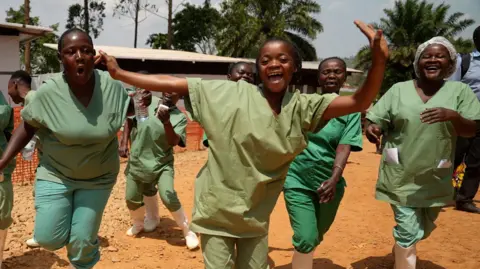
It is strange to witness singing and dancing in a place that has seen so much death. Yet early on Friday, a dozen health workers in green scrubs sang “Grace has been shown to us; grace has been shown to patients” as they escorted Daniel Kitambala out of the clinic.
BBCAfter roughly three weeks, two negative Ebola tests confirmed that Kitambala, a devout Christian, was free of the virus. He described feeling ill and then, “God is great, I am well now,” as medics clapped and cheered.
Because 140 people have died from the Bundibugyo species of Ebola in Ituri, which has about a 20% mortality rate, communities are wary. Yet myths such as the “coffin curse”, which blamed the burning of a broken coffin for the epidemic, have amplified fear and resistance to treatment centres.
The provincial hospital in Mongbwalu now hosts a laboratory that delivers results in under a day, a huge improvement over the previous week‑long wait from Batt. This rapid testing enables quicker isolation and treatment for those who are infected.
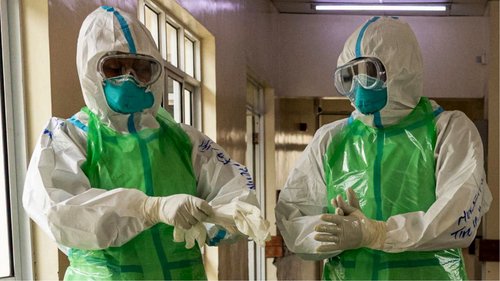
Improved personal protective equipment and strict protocols—patients enter cubicles, only fully‑protected staff are allowed inside, and visitors stay behind 2‑metre barriers—have reduced risks for the 12 health workers currently serving there.
When a patient’s test comes back negative twice, they are discharged and welcomed home. The emotional relief among patients and families has become a sign of hope that the virus can be contained. Yet epidemic control will require tracing every contact in order to catch all infections invisible to the eye.
Henri Lukodu, medical director of Mongbwalu, says the hospital’s reopening and the current recovery trend will rebuild trust. In the days ahead, continued community outreach and rapid testing will be vital to turning the tide against the deadly virus.