In brief
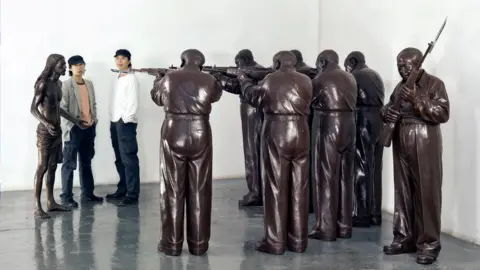
Gao Zhen, a sculptor known for his controversial works critiquing China's political history, was arrested and faced a secret trial under accusations of 'insulting revolutionary heroes'. His case exemplifies the tightening grip of authorities on artistic freedom, signaling a concerning trend in China’s cultural landscape.
The news of Gao Zhen's arrest has shocked the art community and beyond. Known for his controversial sculptures, such as 'Execution of Christ', which depicts Jesus surrounded by Mao Zedong figures, Gao has long challenged the narrative upheld by the Communist Party.
His recent arrest while visiting family in Beijing exemplifies the extreme lengths to which the Chinese government will go to suppress dissenting voices. Gao, who emigrated to the United States in 2022, was detained in mid-2024, and since then, international advocates have rallied for his release, highlighting the retroactive application of laws against artistic expression.
The trial, which occurred last month, was shrouded in secrecy—denying access to the public, family, and foreign diplomats—a clear indication of the regime's fear of exposure. Notably, experts and observers have condemned this move as a manifestation of fear and an increasing crackdown on free expression.
This incident marks a significant escalation in the art world's relationship with political power in China, drawing parallels to previous eras of oppression. The international community is now urged to scrutinize Gao Zhen's case, as it serves as a test of the boundaries of artistic freedom and the risks faced by those who dare to challenge state narratives.