As geopolitical tensions rise globally, the partnership between China and Russia stands out as one that is both complex and dynamic. This relationship has been characterized by mutual interests, with each nation seeking to bolster its position against a backdrop of Western sanctions and shifting alliances.
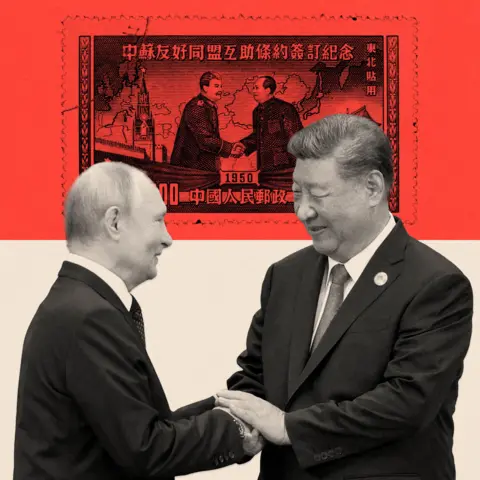
Recently, during an informal discussion captured on a hot mic, Chinese President Xi Jinping and Russian President Vladimir Putin reflected on the potential for extending human life via organ transplants, a topic that belied the intense political undertones of their camaraderie. Their ongoing public displays of friendship underscore a strategic partnership that has been cultivated over years.
This partnership is not without its asymmetries, however; experts note that China, as a significantly larger economy, appears to hold more leverage. The complementary nature of their economies—Russia as a vital supplier of energy resources and China as a manufacturing powerhouse—positions China in a dominant role, as discussed by Alexander Gabuev from the Carnegie Russia Eurasia Center.
The war in Ukraine has further deepened Russia's reliance on Chinese technology, with significant imports of sanctioned materials facilitating Russia's military efforts. Despite these challenges, Russian analysts insist on maintaining a stance of independence and equality, emphasizing that Moscow cannot be relegated to a 'junior partner'.
China's approach to this relationship remains one of caution and self-restraint. Meanwhile, the history of Soviet-era engagements illustrates a longstanding trend towards pragmatic cooperation, which has evolved significantly with current global challenges.
Both nations continue to emphasize their shared opposition to the Western-led world order, bypassing discussions of human rights violations that have complicated their relations with other countries. As international uncertainty continues, the bilateral ties between China and Russia grow increasingly intricate, navigating both economic needs and political aspirations.
Ultimately, while the balance of power within their partnership remains a point of contention, they share a mutual understanding that sustains their collaboration. Russian analysts maintain that this partnership is too crucial to break, given their geographical proximity and converging interests.
Recently, during an informal discussion captured on a hot mic, Chinese President Xi Jinping and Russian President Vladimir Putin reflected on the potential for extending human life via organ transplants, a topic that belied the intense political undertones of their camaraderie. Their ongoing public displays of friendship underscore a strategic partnership that has been cultivated over years.
This partnership is not without its asymmetries, however; experts note that China, as a significantly larger economy, appears to hold more leverage. The complementary nature of their economies—Russia as a vital supplier of energy resources and China as a manufacturing powerhouse—positions China in a dominant role, as discussed by Alexander Gabuev from the Carnegie Russia Eurasia Center.
The war in Ukraine has further deepened Russia's reliance on Chinese technology, with significant imports of sanctioned materials facilitating Russia's military efforts. Despite these challenges, Russian analysts insist on maintaining a stance of independence and equality, emphasizing that Moscow cannot be relegated to a 'junior partner'.
China's approach to this relationship remains one of caution and self-restraint. Meanwhile, the history of Soviet-era engagements illustrates a longstanding trend towards pragmatic cooperation, which has evolved significantly with current global challenges.
Both nations continue to emphasize their shared opposition to the Western-led world order, bypassing discussions of human rights violations that have complicated their relations with other countries. As international uncertainty continues, the bilateral ties between China and Russia grow increasingly intricate, navigating both economic needs and political aspirations.
Ultimately, while the balance of power within their partnership remains a point of contention, they share a mutual understanding that sustains their collaboration. Russian analysts maintain that this partnership is too crucial to break, given their geographical proximity and converging interests.