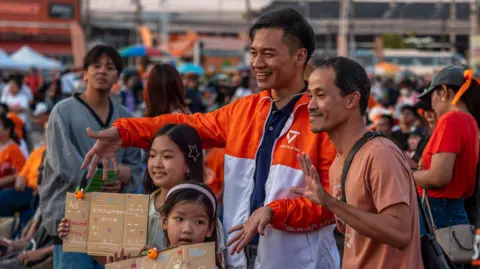
Thailand has voted in an early election called after multiple coalition governments collapsed, giving the country three prime ministers in as many years. Just like in 2023, this election pits those advocating far-reaching change, the People's Party, against conservative forces led by incumbent PM Anutin Charnavirakul. When the young reformers won last time, the military-appointed senate barred them from forming a government and the constitutional court dissolved the party. Powerful, unelected forces have repeatedly intervened to block parties challenging the status quo in Thailand. Results will become clear around 22:00 local time (15:00 GMT), but no party is likely to win a majority. The big question hanging over this election is how well the People's Party performs, as it faces a strong challenge from Anutin, who has built his Bhumjaithai - Thai Pride - party into the standard-bearer for Thai conservatives. He has played on patriotic sentiment after two short border wars with Cambodia last year, promising to defend traditional Thai institutions like the monarchy and military. The third main contender is the Pheu Thai party, historically dominant with populist policies but expected to lose support due to its previous coalition government's issues. Voters are concerned about Thailand's stagnant economy and rising costs, leading many to support the People's Party's agenda for reform. However, merely winning an election may not be enough in Thailand's complex political landscape, where unelected institutions have historically suppressed reformative efforts. Additionally, Thais are voting on a referendum to reform the 2017 constitution, which many believe restricts democracy in the country. Ultimately, this election presents voters with a clear choice: sweeping change or the continuation of the status quo.
Thailand's Crucial Election: Reformists Challenge Conservative Status Quo
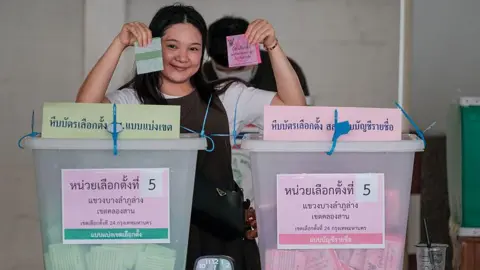
Thailand's Crucial Election: Reformists Challenge Conservative Status Quo
As Thailand votes in a pivotal election, the People's Party leads the charge for reform against conservative forces. Voters are faced with a choice of sweeping change or continuity as political instability looms.
In a significant early election as political instability continues, Thailand has voted. The election pits the reformist People's Party against conservative incumbent Anutin Charnavirakul's leadership. Voter sentiment reveals a desire for change amidst concerns regarding the economy and rising costs of living. With no party likely to secure a majority, the outcomes could potentially reshape the nation's political landscape.