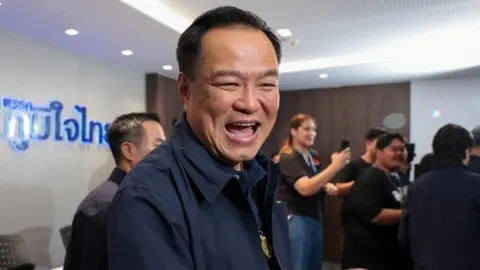
In a surprising turn of events, Prime Minister Anutin Charnavirakul has claimed victory in Thailand's general election, with preliminary vote counts putting his ruling conservatives well ahead of their rivals. After 90% of the votes were counted, Anutin's Bhumjaithai party is projected to win 194 seats in Bangkok's 500-seat parliament, significantly surpassing the opposition People's Party at 116 seats.
Anutin stated that the success belonged to all Thais, no matter whether you voted for us or not, marking a significant political shift as the expected 'orange wave' support for reformist candidates did not materialize. Leader of the People's Party, Natthaphong Ruengpanyawut, appeared to concede the election, expressing readiness to serve in opposition.
The election was called after a coalition led by Anutin collapsed just three months prior. While no party is projected to achieve an overall majority, Anutin is almost certain to remain in office, with his party doubling its seat count compared to the last election held in 2023.
The results point to the unpredictability of Thai elections, with a disappointing outcome for the People's Party, which had hoped to build on its previous success. The reformist agenda, particularly popular among younger voters, failed to resonate as strongly with the older demographic and those in provincial areas, who responded more favorably to Anutin's populist promises.
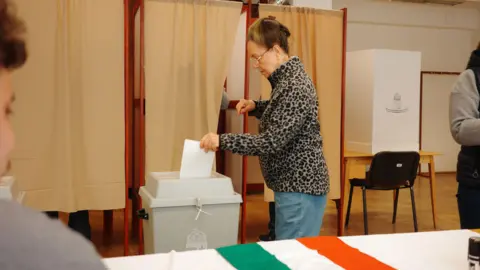
Amidst economic concerns like record household debt and growth lower than previous years, voters expressed a desire for change, yet opted for the financial assistance proposed by Anutin's party. On the same day, a referendum on reforms to the military-drafted 2017 constitution saw approximately 65% voting in favor, highlighting ongoing discussions about Thailand's democratic process.
Anutin stated that the success belonged to all Thais, no matter whether you voted for us or not, marking a significant political shift as the expected 'orange wave' support for reformist candidates did not materialize. Leader of the People's Party, Natthaphong Ruengpanyawut, appeared to concede the election, expressing readiness to serve in opposition.
The election was called after a coalition led by Anutin collapsed just three months prior. While no party is projected to achieve an overall majority, Anutin is almost certain to remain in office, with his party doubling its seat count compared to the last election held in 2023.
The results point to the unpredictability of Thai elections, with a disappointing outcome for the People's Party, which had hoped to build on its previous success. The reformist agenda, particularly popular among younger voters, failed to resonate as strongly with the older demographic and those in provincial areas, who responded more favorably to Anutin's populist promises.
Amidst economic concerns like record household debt and growth lower than previous years, voters expressed a desire for change, yet opted for the financial assistance proposed by Anutin's party. On the same day, a referendum on reforms to the military-drafted 2017 constitution saw approximately 65% voting in favor, highlighting ongoing discussions about Thailand's democratic process.