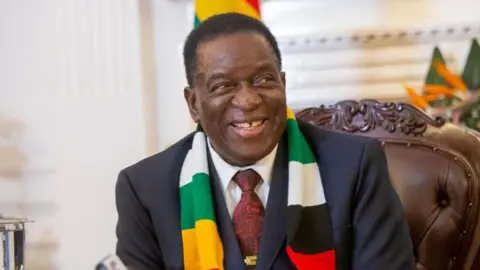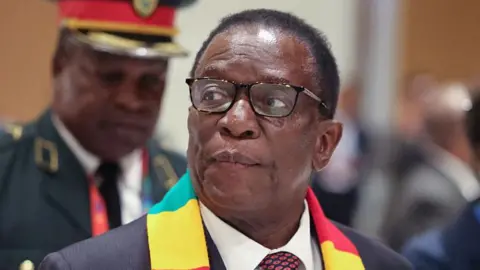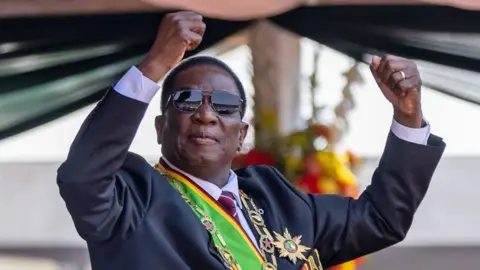
Zimbabwe's cabinet has approved draft legislation that would allow President Emmerson Mnangagwa, 83, to extend his stay in office until at least 2030.
Presidents would be chosen by MPs rather than in a direct vote and could serve a maximum of two seven-year terms, rather than the current five-year terms, under the proposals.
Justice Minister Ziyambi Ziyambi said public consultations would be held before the bill heads to parliament for debate, where both chambers are dominated by the ruling Zanu-PF party.
Legal challenges are likely as constitutional experts argue a referendum is needed if term limits are changed - and also point out that such amendments cannot benefit a sitting president.
Mnangagwa, who first came to power in 2017 after a military coup ousted long-time leader Robert Mugabe, won a presidential election the next year and a second term in 2023 - though the results were disputed. Known as 'the crocodile' because of his political cunning, his final five-year term is due to expire in 2028.
In a referendum held 13 years ago, Zimbabweans overwhelmingly voted for a new constitution that introduced presidential term limits when Mugabe's grip on power seemed entrenched - he had ruled the country since independence in 1980.
Hints that Mnangagwa wanted to stay in power beyond 2028 started two years ago, with the slogan '2030 he will still be the leader' chanted at Zanu-PF rallies.
He has faced detractors within Zanu-PF, including Blessed Geza, known as 'Bombshell,' who recently passed away and had been critical of Mnangagwa's ambitions to extend his power.
The government asserts the intention behind the draft law is to strengthen governance and bring political stability.