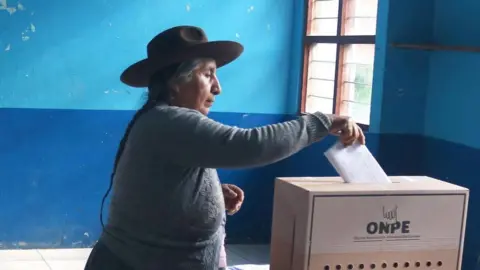
Peru's general election faced significant delays, prompting a one-day extension for voters hindered by issues at polling places. Over 50,000 individuals were affected, and the electoral authorities stepped in to allow these voters more time on Monday. Technical shortcomings resulted in many polling stations failing to open on time or not at all.
The preliminary count indicates that conservative candidate Keiko Fujimori leads against former mayor of Lima, Rafael López Aliaga. However, no candidate is projected to surpass the 50% threshold for an outright win, setting the stage for a likely runoff on June 7.
Voting is mandatory for those aged 18 to 70 in Peru, and failure to participate incurs a fine. In total, 27 million Peruvians were called to vote, which includes selecting new congressional members and a new president.
Discontent among the public regarding political corruption and rising crime rates is palpable, with demands for candidates to address these issues. Fujimori, leading the vote count, is running for president for the fourth time after previous defeats; her campaign draws heavily on her father's legacy, despite mixed feelings due to his controversial past.
Peru's political scenery is rife with instability, as recent history shows a rapid turnover of presidents, underscoring the importance of this election. Candidates need to regain public trust as they navigate a hopeful but skeptical electorate.