In brief
Taiwan’s Taitung county, famed for its atemoya fruit, sees its main export market in China shift from favour to restriction. Beijing’s recent pledge to buy more atemoyas has been followed by duties and renewed suspensions, a tactic authorities label a ‘raise‑trap‑kill’ approach designed to mount farmers’ dependence before squeezing them. Taiwan’s ministry urges diversification into frozen products and wine, while opposition politicians warn that the fuss risks politicising the industry and hurting livelihoods. The debate echoes the 2021 ban on Taiwanese pineapples, a symbolic instance of China’s economic coercion policy.
A scaly, heart‑shaped fruit known as the atemoya could become the latest flashpoint in China‐Taiwan trade. The island political authority warned farmers that Beijing’s new import commitments may be a risky tactic after a history of abrupt restrictions.
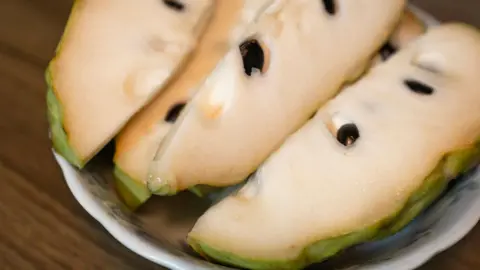
The atemoya, a hybrid of several custard‑apple species with creamy white flesh and a rough green skin, is a specialty of Taiwan’s Taitung county. China – a key buyer of Taiwanese atemoyas – announced it would increase purchases earlier this month, but it has previously suspended imports for pest reasons and applied new duties in 2024, sparking instability for growers.
Taiwan’s agriculture ministry released a press note that the pattern is “a classic example of China’s ‘raise, trap, kill’ process” – creating dependency through large purchases before abruptly imposing export restrictions.
The ministry cited China’s 2021 ban on Taiwanese pineapples as a precedent of economic coercion, noting that the ban devastated farmers and triggered a domestic consumption push. It warned that the latest atemoya policy forces farmers to shoulder extreme risk amid volatile market conditions.
The minister also highlighted that Beijing is expanding its own atemoya cultivation, threatening Taiwan’s domestic industry. In response, authorities aim to promote “sustainable agricultural development” and “stable income for farmers”, encouraging diversification into frozen fruit, puree and wine.
Opposition lawmakers from the Kuomintang party criticised the warnings as politicisation that could dent the local economy. Taipei mayor Chiang Wan‑an accused the Mainland Affairs Council of using the issue to “bully and oppress” farmers and accused the council’s stance of political interference.
Former senator Chiang likened the atemoya to the “TSMC of the fruit world”, saying no other country can match Taiwan’s flavour and uniqueness. Meanwhile, officials from Taiwan’s Mainland Affairs Council had warned that participants in a recent Xiamen forum that had invited Taiwanese business leaders might face investigations for defying official bans.
The atemoya debate underscores a deeper struggle: Taipei’s desire to safeguard farmers while China’s broader trade strategy places the island in a strategic cross‑fire. How Taiwan balances commerce and security will shape the future of its citrus export and the livelihoods of the farmers who grow it.