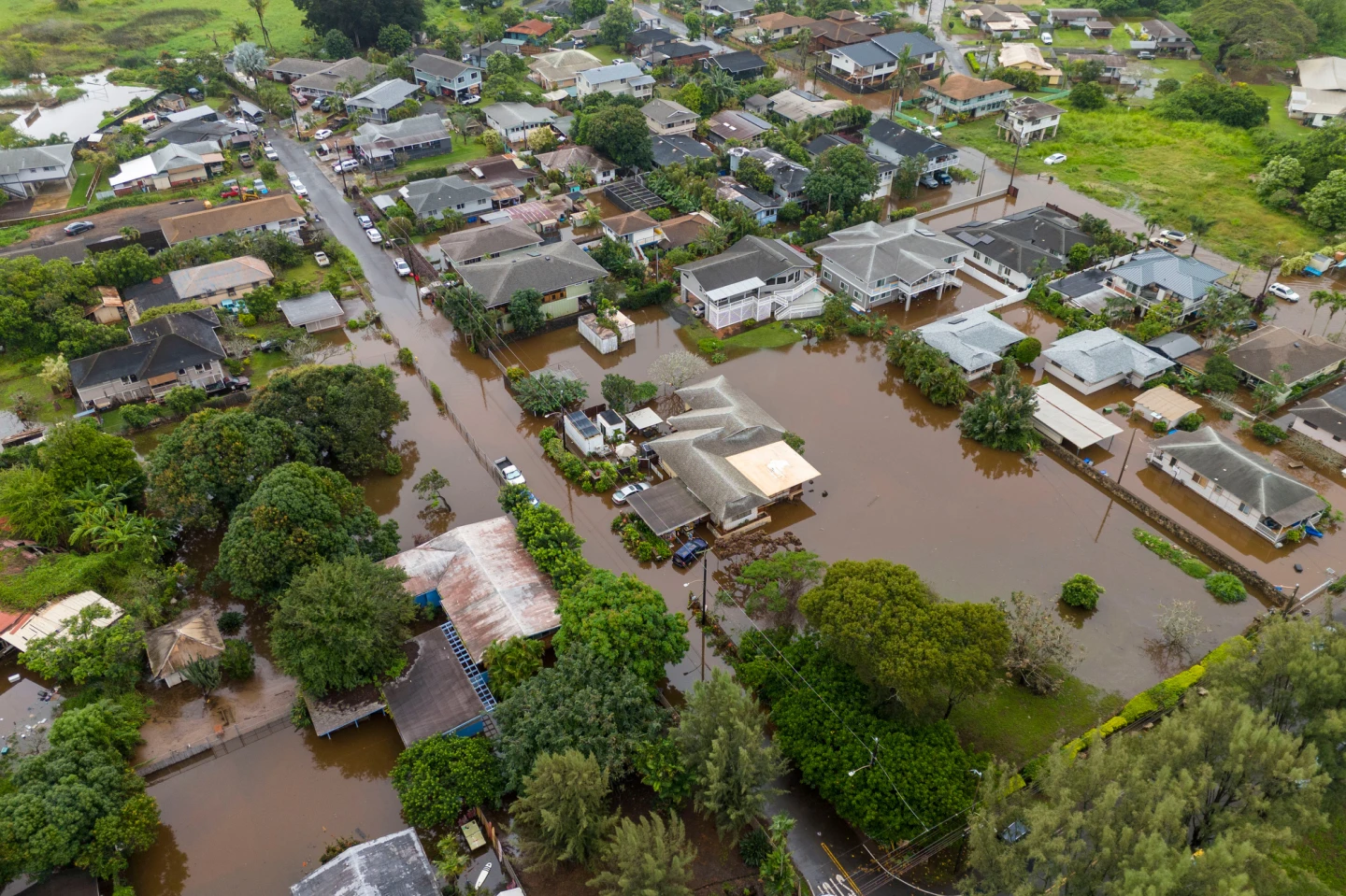
HONOLULU (AP) — Muddy floodwaters from severe rains devastated roads, forced homes off foundations, submerged vehicles, and prompted mass evacuations for thousands in towns north of Honolulu on Friday as officials cautioned about the imminent failure of a 120-year-old dam.
Emergency alerts sounded throughout Oahu’s North Shore, where flooding severely impacted the local community known for its surfing. Honolulu authorities advised residents Friday morning to evacuate areas downstream of the Wahiawa dam which is known to be susceptible to failure.
Rescue teams have rescued more than 230 individuals as heavy rainfall struck the Hawaiian island of Oahu, resulting in one of the island’s worst flooding incidents in 20 years, potentially causing damages exceeding $1 billion, according to the governor.
Water levels at the dam, which authorities express serious concern about, have risen dramatically; in less than a day, the water level surged from 79 feet to 84 feet—only six feet below its operational limit.
No fatalities reported, some hospitalized for hypothermia
Though no deaths were reported, Gov. Josh Green stated there were some instances of hospitalization due to hypothermia. Crews conducted search operations via air and water to assist those stranded, encountering additional challenges posed by personal drones attempting to capture imagery of the flooding.
Dozens of homes suffered damage, with officials unable to fully assess the extent of destruction as roughly 5,500 people remained under evacuation orders. Honolulu Mayor Rick Blangiardi remarked, “There’s no question that the damage done thus far has been catastrophic.”
“It’s going to be a very touch-and-go day,” Hawaii Governor Josh Green noted on social media.
The National Guard and Honolulu Fire Department have airlifted 72 children and adults from a youth camp to safety as floodwaters obstructed access to the site. Meanwhile, authorities are also monitoring the situation in Maui where evacuation advisories were issued for neighborhoods in Lahaina.
Officials have been tracking the dam's levels following recent storms, which led to catastrophic flooding earlier. The recurring “Kona lows” are largely responsible for the increased intensity and frequency of heavy rainfall in Hawaii, exacerbated by human-induced climate changes.
Officials said the dam has a 'high hazard potential' and any failure could likely result in loss of human life. The structure was originally built back in 1906 to bolster sugar production and has undergone multiple inspections and repairs due to historical deficiencies in safety protocols.