In brief
Blue Origin's New Glenn rocket has been grounded after a mishap during a recent satellite launch attempt, leading to an investigation by the Federal Aviation Administration (FAA). The failure was attributed to a lack of sufficient thrust in one of the engines, affecting the intended orbit for the satellite carried. As Blue Origin seeks to address these issues and implement improvements, the FAA will supervise the investigation and determine when the rocket can resume flights.
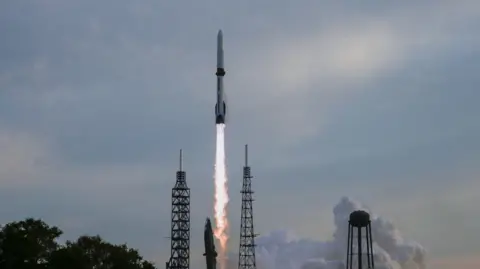
Blue Origin's New Glenn rocket has been grounded after the Federal Aviation Administration (FAA) ordered an investigation into a mishap involving the failed launch of a satellite.
The company, founded by Amazon billionaire Jeff Bezos, attempted to place a satellite from AST SpaceMobile using its New Glenn rocket but was unable to get it as far into orbit as intended.
Blue Origin's chief executive Dave Limp stated that the failure was caused by a lack of sufficient thrust in an engine.
Following the incident, AST SpaceMobile's share price fell by more than 6%. Limp expressed disappointment, declaring, We clearly didn't deliver the mission our customer wanted, and our team expects.\
Blue Origin is investigating the incident, which occurred on Sunday, under the oversight of the FAA.
A FAA spokesperson confirmed, The FAA is requiring Blue Origin to conduct a mishap investigation, and will oversee the Blue Origin-led investigation, being involved in every step of the process and approving the final report, including corrective actions.\
Limp noted that this investigation would allow Blue Origin to learn from the data and implement the improvements needed to quickly return to flight operations.\
The FAA will decide when New Glenn can be launched again based on the investigation findings.
Sunday's launch was only the third flight for the New Glenn rocket, with Blue Origin originally planning up to a dozen launches this year. The rocket was carrying an AST satellite designed for low Earth orbit mobile connectivity.
Due to the failure to drop the satellite into the required orbit, the satellite will be rendered unusable, although AST indicated that the loss would be covered by insurance without disclosing the cost.
As the race for satellite internet continues, companies are increasingly investing in similar technologies, including Amazon's plans to launch thousands of satellites for connectivity solutions. However, these efforts appear to be in competition with SpaceX's Starlink, which has already deployed several thousand satellites in orbit.