In a controversial political landscape, far-right populist Calin Georgescu is contesting the Romanian Central Electoral Bureau's (BEC) decision to bar him from the presidential race set for May. The BEC ruled against Georgescu in a decisive vote, claiming he failed to uphold democratic principles. The country's Constitutional Court is scheduled to hear his appeal shortly. His attempts to run come in the wake of intelligence reports linking Russian interference in his previous electoral success, raising eyebrows and inciting national unrest.
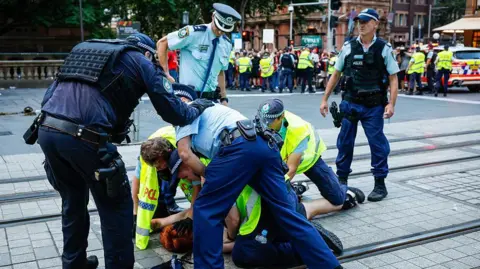
Georgescu articulated his frustrations, asserting the BEC has overstepped its authority and declared its rejection of his candidacy as detrimental to democracy. Following the announcement of his ban, protests erupted in Bucharest, where supporters clashed with police, leading to multiple arrests and property damage. Social media messages from Georgescu urged calm among his followers despite the tensions, emphasizing the need for forward momentum in Romanian politics.
As his supporters rallied outside the BEC headquarters, they expressed their dissatisfaction with the status quo, some even echoing Georgescu's controversial views on pandemic responses. Detractors of Romania's ruling elite are voicing their discontent, claiming widespread corruption and a lack of representation for ordinary citizens.
Significant political figures have backed Georgescu, including George Simion, leader of the far-right AUR party, who has wildly claimed that the political climate is akin to a coup d'état. These radical sentiments have drawn the attention of law enforcement and sparked discussions about hate speech and the boundaries of political expression. While protests initially escalated, a quieter demonstration on Monday saw hundreds continue to support Georgescu, amplifying calls for his reinstatement.
Recent events have underscored the delicate interplay between populism, foreign influence, and the erosion of democratic norms in Romania. Parallel incidents of unrest suggest an increasingly charged atmosphere leading up to the elections, with former US political figures noting the precarious state of Romanian democracy and calling for vigilance against authoritarian tendencies.
Georgescu articulated his frustrations, asserting the BEC has overstepped its authority and declared its rejection of his candidacy as detrimental to democracy. Following the announcement of his ban, protests erupted in Bucharest, where supporters clashed with police, leading to multiple arrests and property damage. Social media messages from Georgescu urged calm among his followers despite the tensions, emphasizing the need for forward momentum in Romanian politics.
As his supporters rallied outside the BEC headquarters, they expressed their dissatisfaction with the status quo, some even echoing Georgescu's controversial views on pandemic responses. Detractors of Romania's ruling elite are voicing their discontent, claiming widespread corruption and a lack of representation for ordinary citizens.
Significant political figures have backed Georgescu, including George Simion, leader of the far-right AUR party, who has wildly claimed that the political climate is akin to a coup d'état. These radical sentiments have drawn the attention of law enforcement and sparked discussions about hate speech and the boundaries of political expression. While protests initially escalated, a quieter demonstration on Monday saw hundreds continue to support Georgescu, amplifying calls for his reinstatement.
Recent events have underscored the delicate interplay between populism, foreign influence, and the erosion of democratic norms in Romania. Parallel incidents of unrest suggest an increasingly charged atmosphere leading up to the elections, with former US political figures noting the precarious state of Romanian democracy and calling for vigilance against authoritarian tendencies.