Just over two years ago, when Sheikh Hasina won an election widely condemned as rigged in her favour, it was hard to imagine her 15-year grip on power being broken so suddenly, or that a rival party that had been virtually written off would make such a resounding comeback. But in the cycle of Bangladeshi politics, this is one more flip-flop between Hasina's Awami League and the Bangladesh Nationalist Party (BNP), which have alternated holding power for decades. Except this is the first time that new BNP leader Tarique Rahman is formally leading the party - and the first time he's contested an election. His mother Khaleda Zia, who died late last year, previously held the position for decades. Rahman, 60, has returned from a 17-year exile amid allegations of corruption and nepotism but is now seen as a potential bringer of change. Political analysts suggest that Rahman’s lack of prior experience may work in his favor, as citizens are eager for a refreshing approach. Young voters, emboldened by the recent uprising, expect reform and a commitment to democracy as Rahman's administration begins addressing issues of law, order, and economic recovery.
New Leadership in Bangladesh: Can Tarique Rahman Inspire Change?
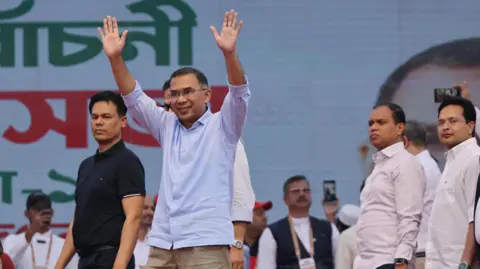
New Leadership in Bangladesh: Can Tarique Rahman Inspire Change?
Following a surprising electoral victory, Tarique Rahman of the Bangladesh Nationalist Party faces the challenge of revitalizing democracy amid a history of political upheaval. Young citizens demand reform and accountability.
After a notable electoral landslide, Tarique Rahman is poised to lead Bangladesh as the new Prime Minister, marking a shift in the political landscape that has seen the Bangladesh Nationalist Party reclaim power from the Awami League. This election, distinguished by its competitiveness and the active participation of a politically aware youth, signals a critical moment for Rahman as he navigates the complexities of governance, economic recovery, and restoring trust in democratic institutions. Public sentiment is hopeful yet cautious, emphasizing the need for genuine reform and unity in a nation historically marked by political strife.