In brief
Historically a strong competitor in the Eurovision Song Contest, Ireland has decided to boycott the event this year alongside several other countries. This decision stems from political tensions relating to Israel's participation amidst ongoing conflicts in Gaza. The national broadcaster RTÉ has opted to air a 'Father Ted' episode instead of the contest, further igniting discussions about cultural boycotts and political solidarity. Public opinion in Dublin leans towards support of the boycott, while reactions vary within the Jewish community in Ireland. The article delves deeply into these dynamics and the reactions they provoke.
From Johnny Logan and Dana to years of dominance in the early 1990s, Ireland has a storied history with the Eurovision Song Contest. Ordinarily, the country, which holds the joint record for most wins with Sweden, would join the rest of Europe in eagerly awaiting Saturday's grand final. But not this year.
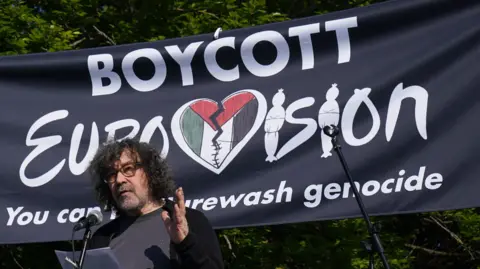
Ireland is one of five countries, alongside Iceland, the Netherlands, Slovenia, and Spain, that are boycotting the contest over the European Broadcasting Union's (EBU's) decision to allow Israel to participate. The competition will feature no Irish entrant, and the national broadcaster RTÉ will not be airing events from Austria, instead opting to show a Eurovision-themed episode of sitcom Father Ted.
Ireland's participation in the boycott reflects its stance on the recent violence in Gaza, positioning it as one of the most pro-Palestine countries in Europe. Israeli broadcaster Kan described the absence of Ireland and other countries as a cultural boycott that harms freedom of creation and expression.
Public sentiment in Dublin is largely supportive of the boycott. Young people interviewed expressed a belief that the UK should follow suit and abstain from the contest as well.
However, within Ireland's Jewish community, opinions differ about the boycott. Some argue it is an act of solidarity, while others, including community leaders, contend that it inflicts collective punishment on a diverse population, including Arab Muslims living in Israel.
As the controversy unfolds, the decision has sparked broader discussions about the intersection of culture and politics, and how international events influence public engagement with entertainment.