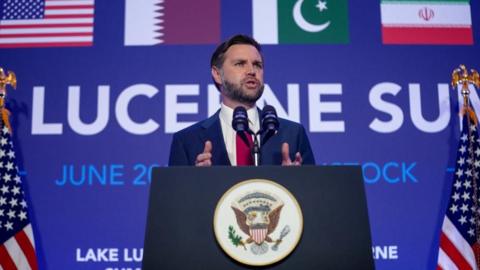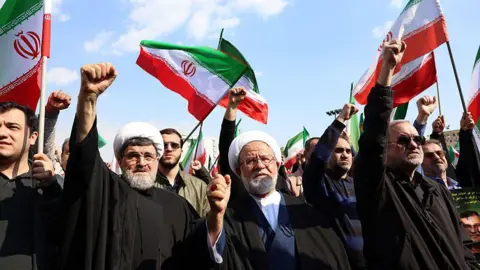
Donald Trump's prime-time address regarding the war with Iran aimed to convey a perception of military success while revealing a paradox: though he proclaimed Iran's military capabilities destroyed, he simultaneously threatened escalations. This duality left the impression of victory unachieved. His rhetoric, notably the remark on bombing Iran 'back to the stone ages,' has further incited frustration within Iran, solidifying the view of the nation as besieged rather than encouraging revolt against the regime.
Despite Trump's assertions of having achieved regime change following the assassination of Supreme Leader Ayatollah Ali Khamenei, the core governmental apparatus and leadership remain intact. Evidence supports that power dynamics in Tehran have not fundamentally altered, as key figures in government and military have either survived or been replaced by equally hardline successors. What appears is not regime change but rather regime evolution, characterized by resilience amid existential threats.
Iran's strategic aim centers not on conventional victory but survival and deterrence, even as it endures heavy military engagement. This sense of perseverance emphasizes the steadfastness of Iran's command structures and reflects a broader strategy to endure against superior military aggression. The perspective that simply remaining operational constitutes success frames Tehran's ongoing actions.
This reinforces the geopolitical calculations for external entities like the United States, facing the dilemma of validating Iran's endurance model should they withdraw, or entangling further with no clear victory should they persist in military actions. The situation remains precarious with Iranian demands for continued survival, credible deterrents against future strikes, and assurances against sanctions remaining unchanged. As the war continues, the inevitable economic strains could yet compel shifts in Iran's negotiating posture, but the immediate threats only consolidate its existing regime.
Despite Trump's assertions of having achieved regime change following the assassination of Supreme Leader Ayatollah Ali Khamenei, the core governmental apparatus and leadership remain intact. Evidence supports that power dynamics in Tehran have not fundamentally altered, as key figures in government and military have either survived or been replaced by equally hardline successors. What appears is not regime change but rather regime evolution, characterized by resilience amid existential threats.
Iran's strategic aim centers not on conventional victory but survival and deterrence, even as it endures heavy military engagement. This sense of perseverance emphasizes the steadfastness of Iran's command structures and reflects a broader strategy to endure against superior military aggression. The perspective that simply remaining operational constitutes success frames Tehran's ongoing actions.
This reinforces the geopolitical calculations for external entities like the United States, facing the dilemma of validating Iran's endurance model should they withdraw, or entangling further with no clear victory should they persist in military actions. The situation remains precarious with Iranian demands for continued survival, credible deterrents against future strikes, and assurances against sanctions remaining unchanged. As the war continues, the inevitable economic strains could yet compel shifts in Iran's negotiating posture, but the immediate threats only consolidate its existing regime.