In brief
In a highly anticipated primetime address, President Donald Trump will provide important updates on the ongoing conflict in Iran. While many hope to gain insight into the potential end of the war, the lack of clarity around Trump's intentions and the pressures of public opinion are raising questions about the future of U.S. involvement. A recent poll shows a significant majority of Americans favor a swift conclusion to the conflict, emphasizing the need for a clear strategy as domestic concerns about rising gas prices take center stage.
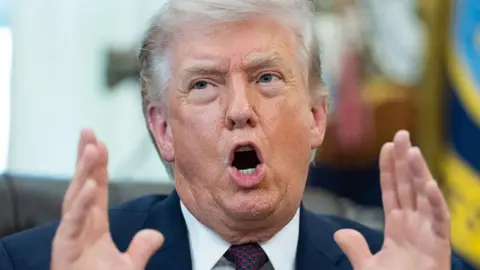
Across the world on Wednesday night, millions of people will tune in to watch Donald Trump deliver a primetime update on the war in Iran. Many will hope for some insight on how the war ends and what might come after.
The Trump administration has, so far, given little clue as to what prompted the hastily arranged remarks, or whether they will mark the beginning of the end of the conflict or a potentially bloody escalation.
This ambiguity is, at least partly, by design. Trump often changes course or leaves his thinking a mystery to all but a small inner circle of supporters, which he has acknowledged leaves friend and foe alike wondering about his next move.
The president also knows that the address comes at a critical time in his presidency and amid mounting domestic pressure to find a way out of the conflict.
Poll after poll has shown that Americans have little appetite for a protracted conflict in Iran, particularly if it involves the prospect of U.S. soldiers on Iranian soil.
A Reuters poll released this week found that two-thirds of Americans believe the U.S. should work to swiftly wrap up its involvement in the war, even if the administration's stated military objectives are not fully accomplished.
Closer to home, many Americans are increasingly wary of higher prices at the petrol pump, which this week crossed the average of $4 a gallon for the first time in years.
For a president who, pre-war, often pointed to lower petrol prices as a mark of success, this trend represents a challenge.
Imran Bayoumi, a geostrategy expert with the Atlantic Council in Washington DC, suggested that the deep domestic unpopularity of the war and its economic repercussions pose significant challenges ahead of the midterm elections, should the conflict persist.
This evening, Trump will likely present his view on how the conflict—or at least U.S. involvement in it—will conclude. His narrative has shifted repeatedly from initial calls for an 'unconditional' Iranian surrender to discussions of a potential negotiated settlement.
Just yesterday, he suggested that the war could conclude in 'two to three' weeks, even without a formal agreement. However, today he indicated on social media that Iran's leadership sought a ceasefire; yet, the U.S. would not entertain this until the Strait of Hormuz opens.
Until that point, Trump asserted that the U.S. would continue its military operations, vowing to reduce Iran 'to the Stone Ages'. What constitutes victory remains vaguely defined, allowing Trump to declare success whenever he chooses.
While the tactical accomplishments of U.S.-Israeli operations have significantly degraded Iran's military capabilities, Trump's assertion of an imminent conclusion to military actions limits further complex strategies, such as securing Iran's enriched uranium.
Trump’s words will be closely monitored by both allies and adversaries, with skepticism about whether his plans reflect genuine intentions or if they are merely strategic maneuvers.