Machines mining minerals in the deep ocean have been found to cause significant damage to life on the seabed, scientists conducting the largest study of its kind report. They discovered that the number of animals found in the vehicle tracks was reduced by 37% compared to untouched areas.
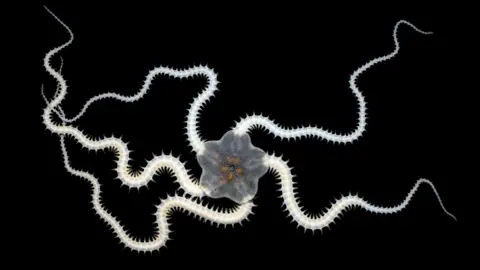
The researchers identified over 4,000 animals, 90% of which were new species, in a remote area of the Pacific Ocean. While many critical minerals needed for green technologies might be locked in the deep ocean, the controversial nature of deep-sea mining has prompted a pause until more is known about its environmental impacts.
Conducted by a team from the Natural History Museum in London, the UK National Oceanography Centre, and the University of Gothenburg, the research reveals that the biodiversity near the tested mining site was significantly affected. The machines operate by removing about the top five centimeters of sediment—a habitat for most seabed animals.
Despite the degradation observed during testing, areas near the vehicle tracks did not show a decrease in animal abundance but rather a shift in which species were dominant. Researchers remain concerned, citing that pollution from the mining operations could pose a threat to less resilient species.
This study highlights the tension between the urgent demand for minerals essential for renewable energy technologies and the potential for devastating environmental consequences. As international regulations on deep-sea mining continue to develop, the findings bring to light the pressing need for responsible exploration practices that safeguard marine biodiversity.