In brief
Researchers at Heinrich Heine University Düsseldorf have found that ocean acidification, driven by human activities, could weaken the teeth of sharks, risking their dominance in the oceanic food chain. This study highlights the broader implications of climate change on marine life and the urgent need for conservation efforts.
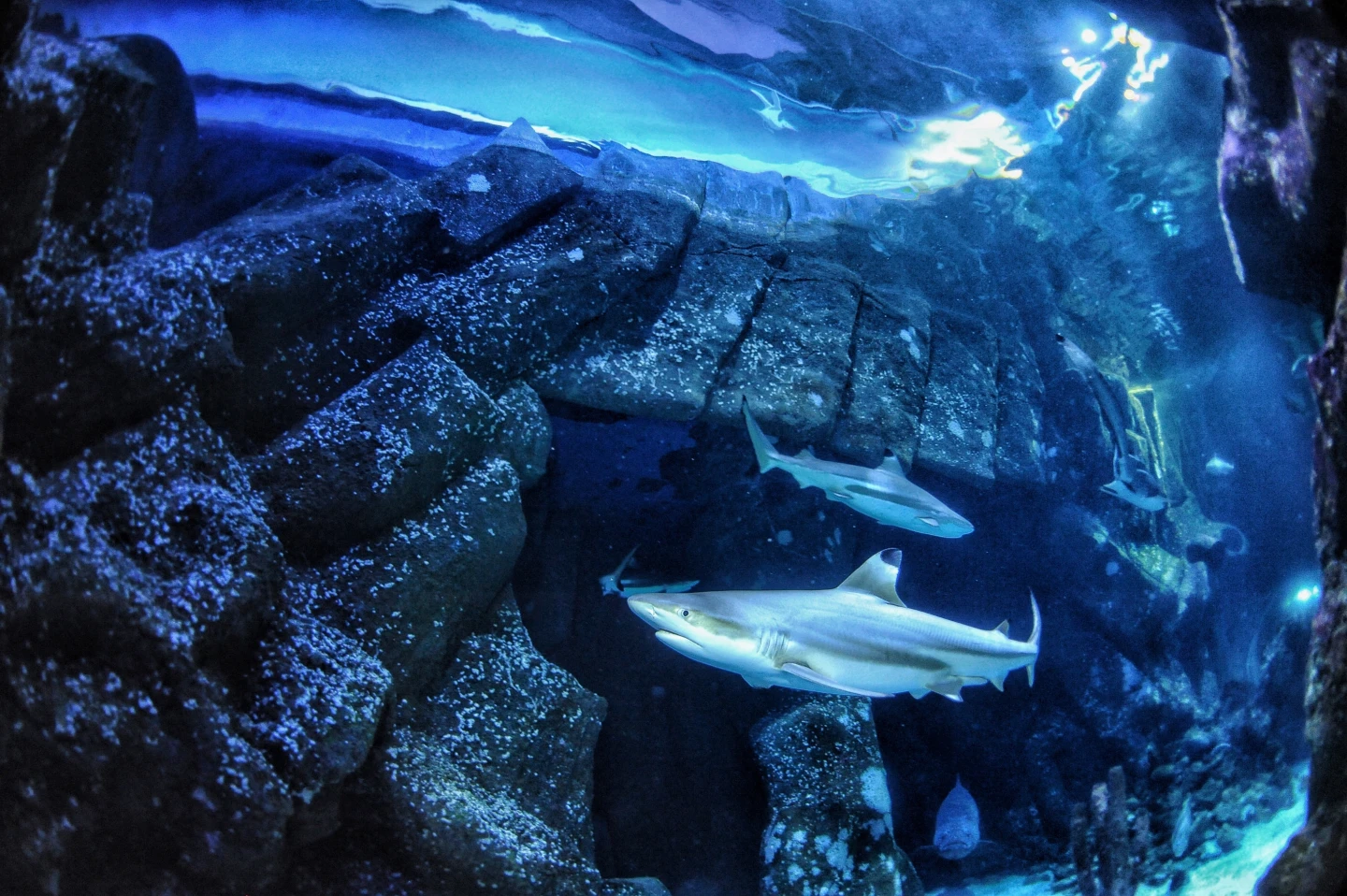
PORTLAND, Maine (AP) — Sharks, regarded as the ocean's most formidable predators, depend on their formidable teeth, which regenerate throughout their lives. However, a recent study from German scientists suggests that the ongoing acidification of oceans, a phenomenon exacerbated by human activities such as fossil fuel combustion, may compromise these essential tools.As ocean acidity increases, researchers discovered that sharks' teeth could become structurally weaker, leading to a higher likelihood of breakage. This change poses a threat to their position at the apex of the marine food web. According to Maximilian Baum, a marine biologist and lead author of the study published in Frontiers in Marine Science, while sharks are not likely to lose their teeth overnight, this potential weakness represents a significant new challenge for these creatures that are already contending with pollution, overfishing, and climate change.The research team analyzed over 600 discarded teeth from blacktip reef sharks, a species that inhabits the Pacific and Indian oceans. They subjected the teeth to current and projected levels of ocean acidity for the year 2300. The results indicated substantial damage to teeth exposed to more acidic water, exhibiting cracks, holes, and structural damage.Despite these concerning findings, experts note that sharks have demonstrated resilience over millions of years. Some suggest that while ocean acidification will likely impact various marine species, including shellfish and fish that sharks prey upon, the immediate future of sharks might not be as bleak as it appears. Conservationists emphasize that overfishing remains the foremost threat to shark populations, which are already facing a high risk of extinction. Ultimately, the study calls for heightened awareness and conservation efforts to mitigate the multidimensional threats sharks face in our changing oceans.