In brief
Rows of shops at Karmel Mall, bustling with life, are now eerily quiet as many Somali business owners report significantly reduced foot traffic due to heightened fears of federal immigration agents. This phenomenon is attributed to the sweeping immigration enforcement measures referenced by President Trump's administration, affecting the community financially and emotionally. Business owners note that the once vibrant mall is now a shadow of its former self, with many choosing not to open their doors, fearing repercussions stemming from racial targeting and potential immigration enforcement that could impact their livelihoods.
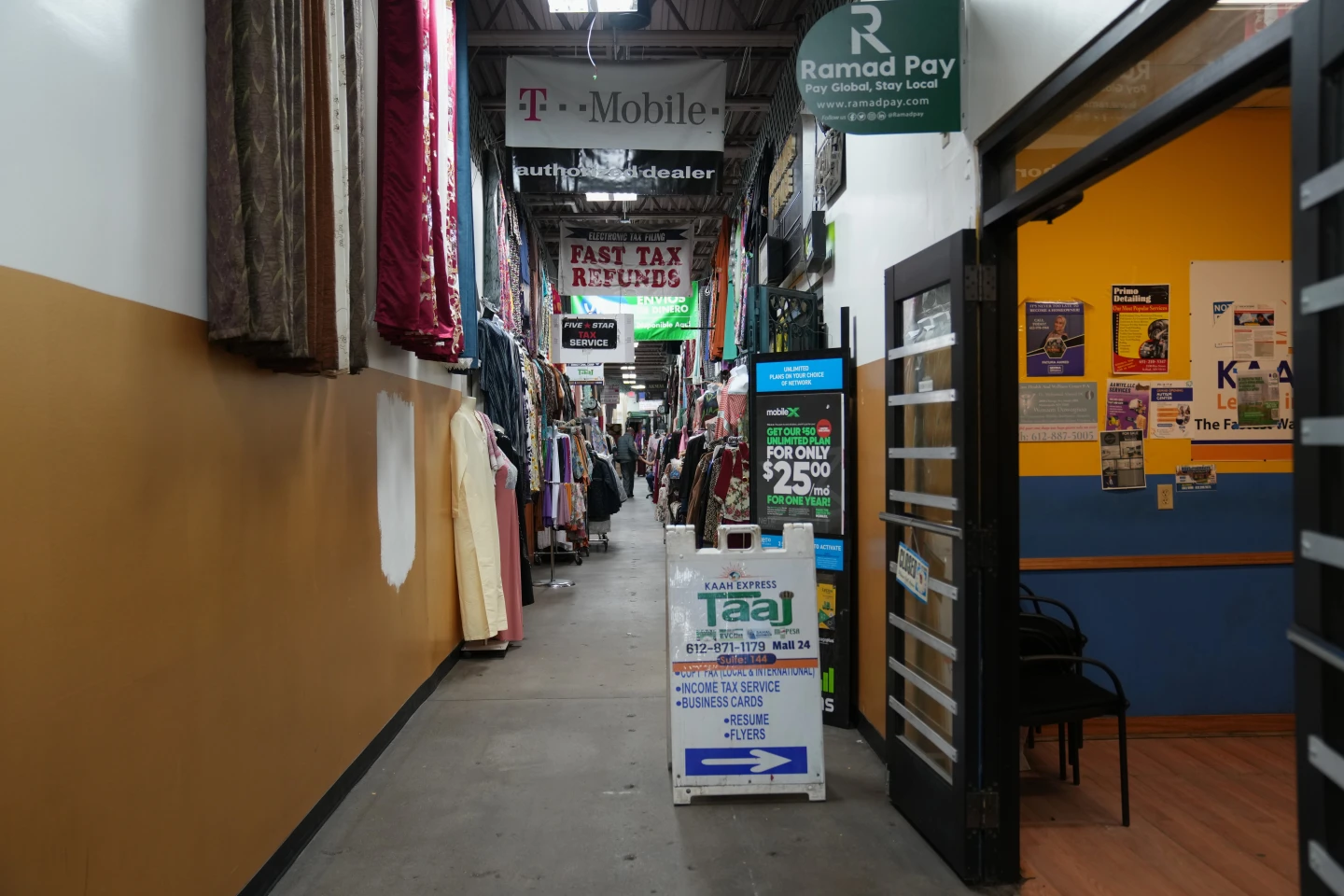
MINNEAPOLIS (AP) — Rows of businesses stood shuttered inside a sprawling complex of Somali businesses on a recent afternoon.
Karmel Mall in south Minneapolis contains more than a hundred small businesses in suites offering everything from clothing and food to insurance and accounting services. On Thursday, the noisy hallways inside lay quiet, save for occasional chatter between neighboring vendors. The smell of fried food still wafted from the bakeries, the central heating hummed and the sound of Quran recitation flowed quietly from some shops.
But many sellers sat alone in their clothing stores, waiting for the occasional customer to walk by. Everyone is afraid of federal immigration agents, business owners said. Sellers and customers, citizens and noncitizens. Some don’t bother opening shop because they aren’t expecting any customers.
“It’s been like this for three weeks now,” said Abdi Wahid, who works at his mom’s convenience store in the mall. “Everywhere it’s all been closed up, all the stores.”
Karmel Mall is an economic hub for the area’s Somali population, which is the largest in the U.S. But it also features housing, a mosque, and Quran classes, serving as a robust community center for the area.
The economic impact of the Trump administration’s 'Operation Metro Surge' stretches beyond the Somali community: many immigrants are on edge, afraid to go to work or leave their homes amid the immigration crackdown.
Wahid said early afternoons at the family business once meant 15 to 20 customers. These days, it’s tough to get one. He noted that citizens are scared too, especially after the killing of Renee Good and the ICE raid at Roosevelt High School in south Minneapolis.
“I think that caused a lot of people to not even want to come,” he said, because they could be targeted “just because of their race.”
Bashir Garad runs Safari Travel & Accounting Services, and he noted the crackdown in Minneapolis has led to lost clients unable to travel for fear they won’t be let back into the country.
“They see a lot of unlawful things going on in the city,” he added, “and they think some bad things may happen to them.”
Homeland Security assistant secretary Tricia McLaughlin stated that law enforcement uses “reasonable suspicion” to make arrests, assuring that a person’s immigration status, not race or ethnicity, makes them a target for enforcement.
However, business owners worry that the stringent actions are unfairly impacting their community. Ibrahim Dahiye, selling electronics, said his business is down $20,000 monthly, emphasizing that many of his customers avoid coming to the mall.
“The government is not doing the right thing,” he said. “If there’s a criminal, there are ways to find them, but to marginalize the community's name is unlawful.”