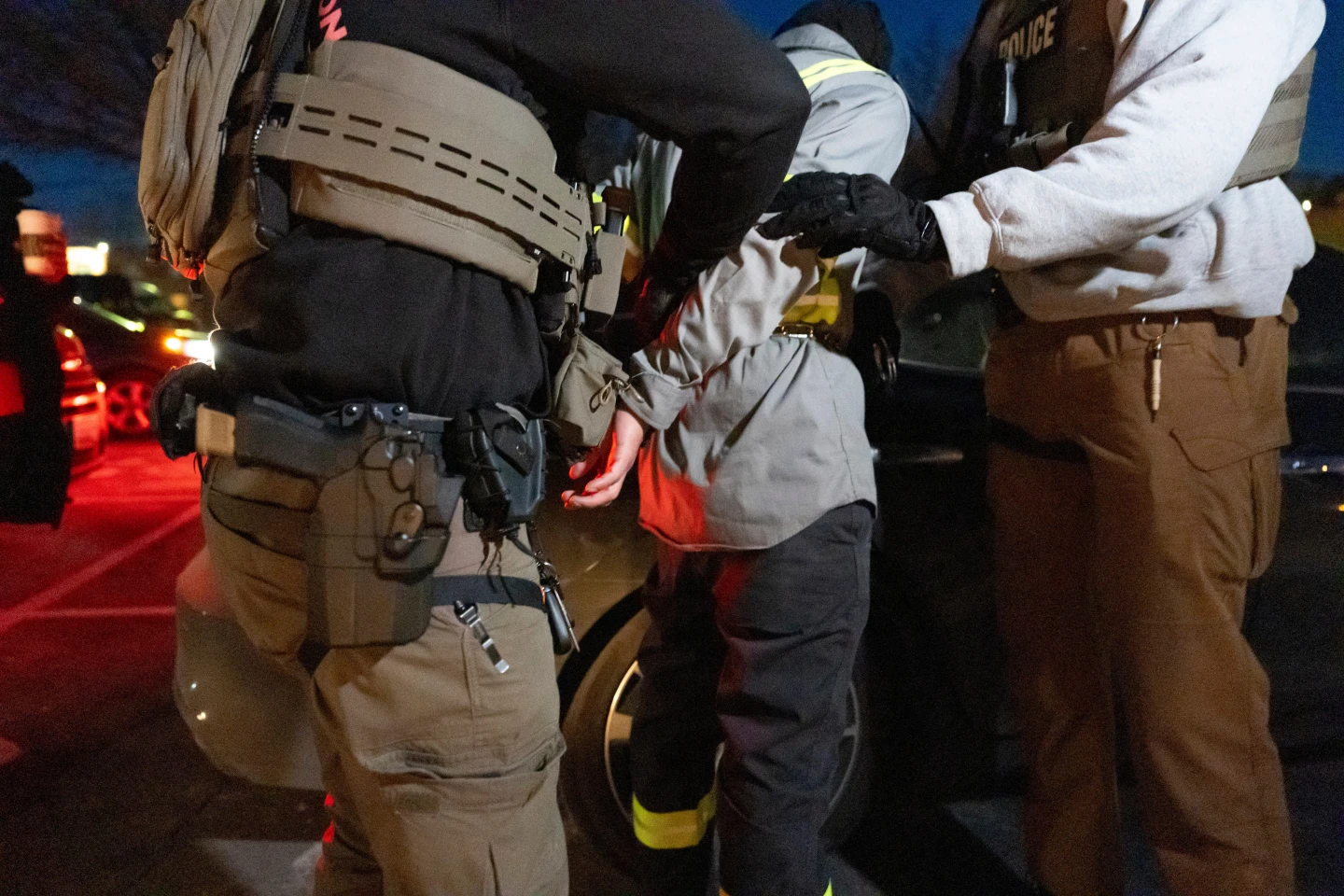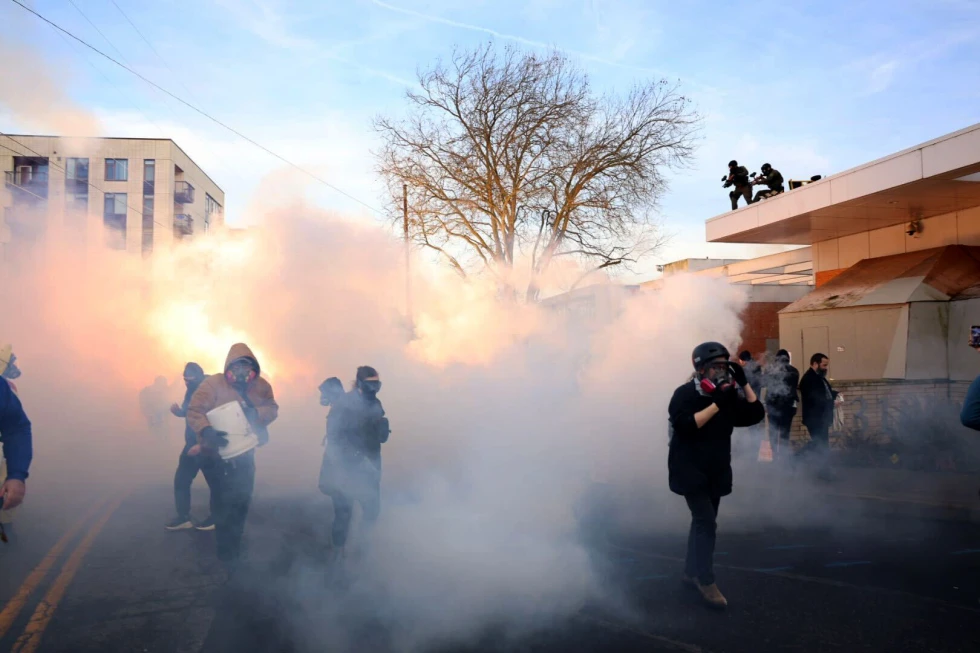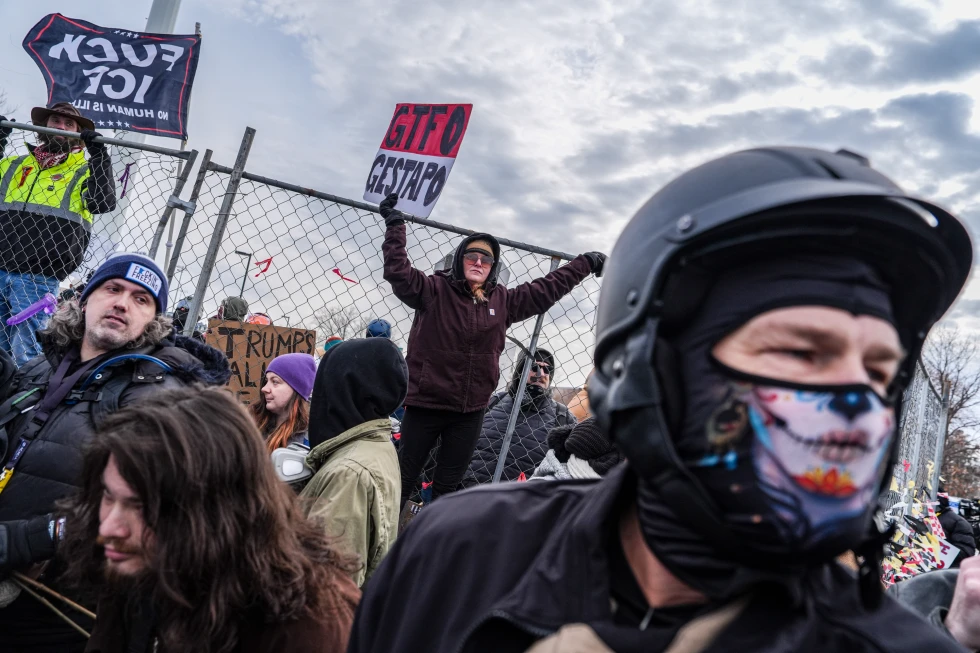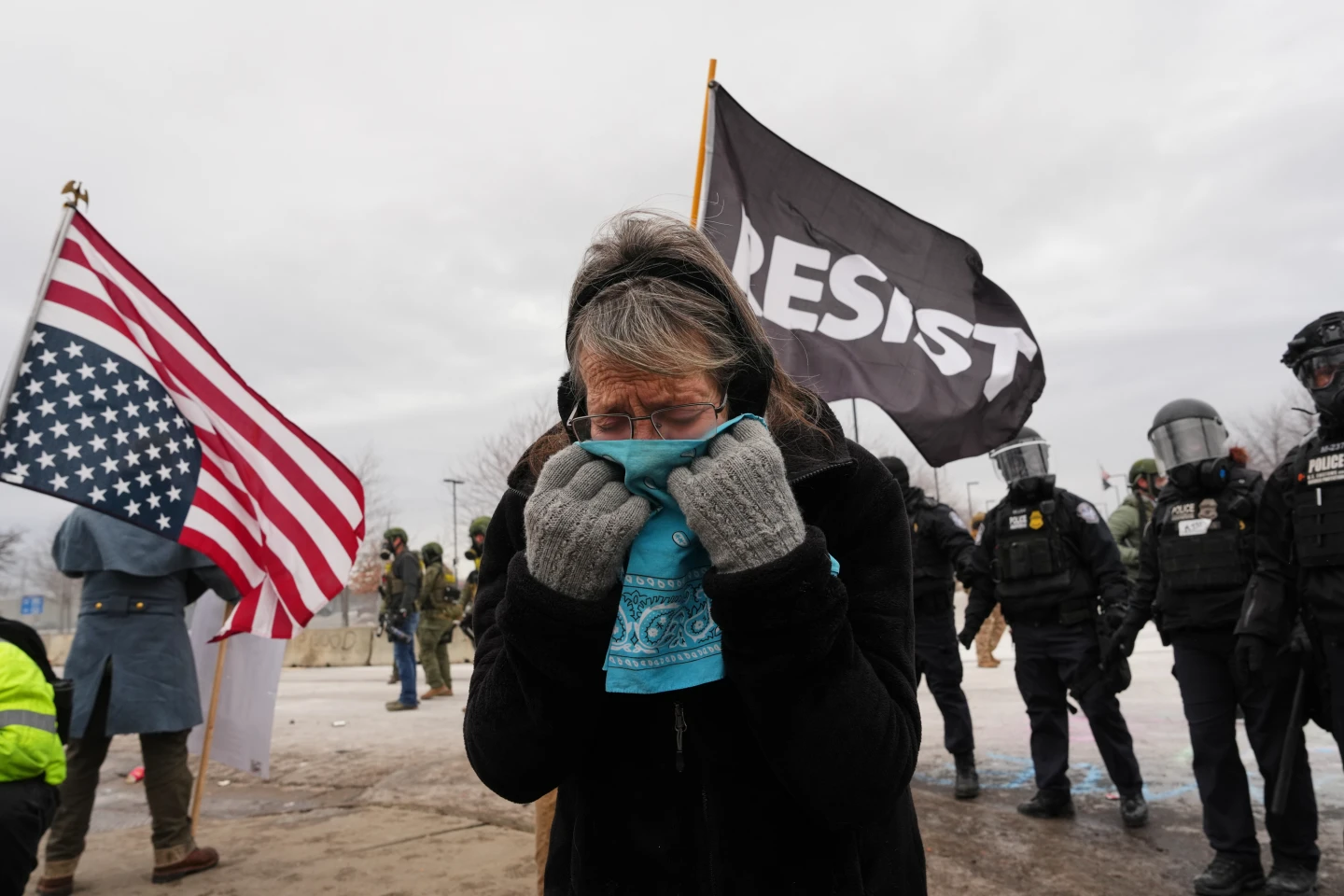
Federal immigration agents deployed to Minneapolis have recently employed aggressive crowd-control tactics, such as pointing rifles at demonstrators and deploying chemical irritants during confrontations. Government officials claim these actions are necessary to safeguard officers from potential violence. However, law enforcement experts warn that such measures escalate risk and are exercised by agents lacking extensive crowd management training.
Videos and eyewitness accounts reveal federal agents breaking vehicle windows, pulling occupants from cars, and deploying chemical agents like tear gas and pepper spray during standoffs with protesters. Experts assert that while these tactics may be justified for specific arrests, they pose greater risks in crowds.
The intensification of confrontations coincides with a significant immigration enforcement operation launched by the Trump administration in early December, which involved over 2,000 officers from the Department of Homeland Security entering the Minneapolis-St. Paul area. Many of these officers are typically focused on arrests, deportations, and investigations, not managing unpredictable public demonstrations.
This situation reflects a broader trend where the federal government is relying on immigration agents for crowd control, traditionally a role for local law enforcement. Experts caution against this approach, suggesting it contradicts de-escalation standards and risks transforming volatile protests into deadly encounters.
Tensions have spiked following the fatal shooting of 37-year-old Renee Good by an immigration agent, an incident that federal officials defended as self-defense. The aftermath has prompted increased scrutiny and protests regarding the handling of federal agents during such events.
The American Civil Liberties Union of Minnesota has filed a lawsuit seeking a federal judge's intervention to impose an emergency injunction limiting the federal agents’ operations during protests. This includes calls for restrictions on the use of chemical agents, prohibiting the pointing of firearms at non-threatening individuals, and protecting lawful documentation of such actions.
Former Immigration and Customs Enforcement Director Sarah Saldaña noted a shift in the manner federal officers conduct operations, emphasizing that agents generally lack the proper training for handling crowds. Training that her officers once received about interacting with observers has become crucial as federal tactics have evolved to aggressively respond to protests.
Experts highlight a pressing need for standardized policies and training within law enforcement to understand the consequences of excessive force and to facilitate better communication between officers and protest organizers. Establishing a clear engagement approach can help mitigate tensions on both sides and prevent unnecessary violence, particularly when the task falls increasingly on federal agencies.