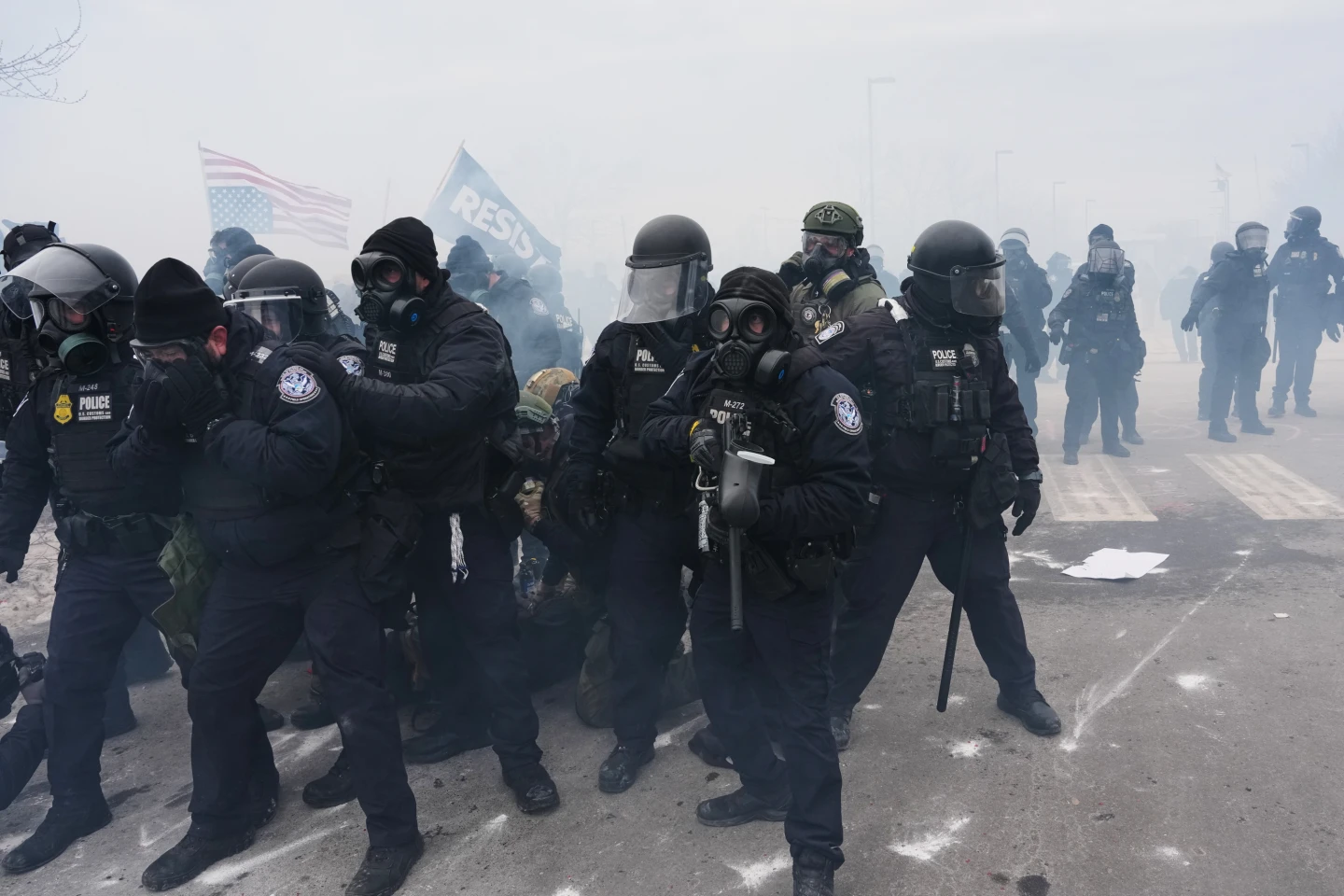
As the Trump administration's immigration crackdown escalates in Minneapolis, it is increasingly employing messaging that incorporates phrases, images, and music associated with national identity and popular among right-wing factions.
On January 9, following the U.S. Immigration and Customs Enforcement (ICE) shooting of Renee Good, tensions soared in the city. The Department of Homeland Security (DHS) took to social media to share an evocative image featuring a man on horseback in a snowy landscape, accompanied by the phrase We'll have our home again, which has been associated with a song utilized by far-right groups.
The following day, the Department of Labor echoed this sentiment through a post declaring, One Homeland. One People. One Heritage. Remember who you are, American. Observers quickly highlighted the chilling similarities to a well-known Nazi slogan, thus igniting further concerns regarding the administration's choice of rhetoric.
As President Trump amplifies his campaign for Greenland, the White House shared another provocative graphic featuring a dog sled presented with a choice between an American flag and flags of Russia and China, asking, Which way, Greenland Man? Critics noted this language harkens back to white supremacist themes.
Responding to the resulting backlash, administration spokespeople dismissed claims of a racist agenda as media sensationalism, labeling the criticism as boring and tired. Yet, many legal experts argue that the administration is intentionally choosing to invoke such imagery, fostering fears that align closely with white nationalist narratives.
Despite Trump's success in appealing to diverse voters, his alignment with extreme rhetoric has raised alarms regarding the potential normalization of hate speech within national dialogues, particularly as he continues to influence sentiments surrounding immigration policy.