In brief
On 26 August a glacial collapse triggered a tidal wave of rocks and mud that swept across the Nepal‑Tibet border, killing roughly 475 people and leaving more than 900 missing. Rescue teams have paused operations after a secondary lake threatened a second breach. Scientists attribute the disaster to glacier thinning amid warming, while governments from China, Nepal and India coordinate aid. The crisis has left thousands of tourists from dozens of countries stranded.
Massive landslides and flash floods on the Nepal‑Tibet border have devastated the region, killing hundreds and leaving many missing.
The disaster began on Wednesday when a glacier near the border collapsed, sending a torrent of ice, rock and mud into the Linde Khola, Bhote Koshi and Trishuli rivers. The debris surge flooded villages and border checkpoints within minutes.
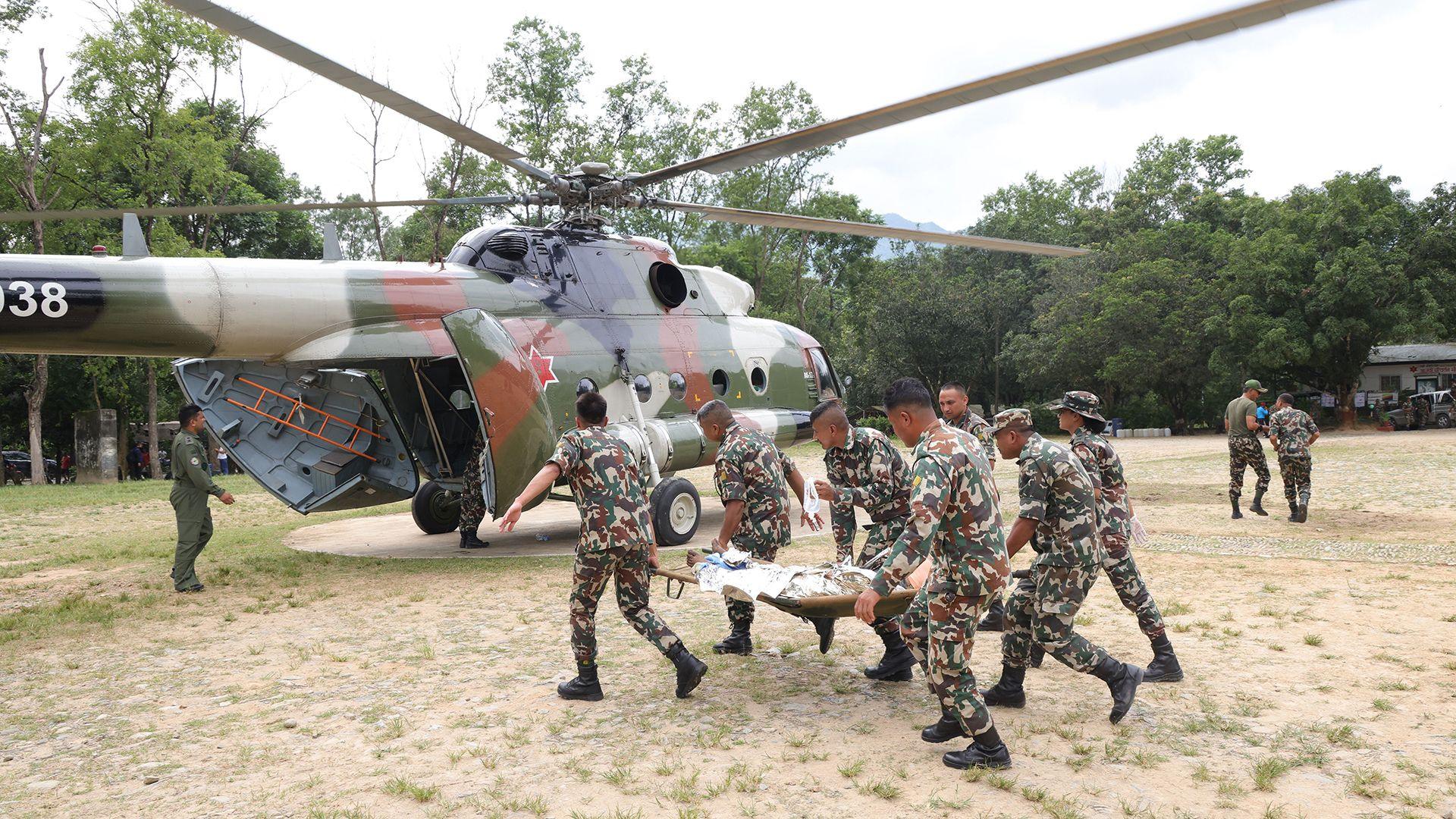
Rescue teams from the Nepali army, police and the International Centre for Integrated Mountain Development (ICIDMOD) have been working to pull survivors from the mud and debris while searching for the missing. Chinese authorities halted operations after a rising lake threatened to burst a second time.
Reports from the US Geological Survey describe the event as an “shallow glacial collapse” that produced a 5.2‑M earthquakes‑like shock, followed by a catastrophic downstream debris flow.
China’s state media and Nepalese officials both describe the casualties in “huge scale loss.” Current figures show at least 475 deaths in Nepal, and 910 missing, including 517 foreigners, 44 Nepali army personnel and 28 police officers.
How many people are dead and missing?
While the numbers are still uncertain, Nepali police released that 475 people have died by Friday morning. Additional missing totals exceed 900, with tourists from India, China, the US, Ukraine, Malaysia, Australia, the UK, Canada and several other nations among the pre‑tabled group.
Which countries are the missing tourists from?
Tours from over 20 nations were affected: India (288), China (~100), US (65), Ukraine (53), Malaysia (51), Australia (39), the UK (33), Canada (24) and smaller groups from South Korea, South Africa, Portugal, the Netherlands and New Zealand.
What caused the deadly landslide?
Initial rumours of an earthquake were quickly disproved. Scientists confirm it was a glacial collapse, likely accelerated by thawing permafrost and rapid glacier thinning. The resulting debris flow stopped a river, creating a temporary dam that burst 12 to 18 hours later, producing the fatal flood.
How are governments responding?
Prime Ministers Balendra Shah (nepali) and Xi Jinping (China) called for coordinated search and early‑warning systems. President Narendra Modi (India) pledged humanitarian aid, and the UN’s António Guterres ordered rapid deployment of relief teams.
Financial aid has been promised: the US pledged $500,000, the UK offered £5m, and China announced a 2‑hour breach‑monitoring plan. China’s Premier Li Qiang has personally supervised rescue operations at the Gyirong border crossing.
Rescue teams are still evaluating a secondary flood risk, while local officials warn remaining breaches could inundate the Trishuli and Narayani rivers.
Aerial footage shows the magnitude of the flood and the scale of the disaster, underscoring the need for immediate international support.