In brief
Peatland fires in Borneo have turned the skies an amber colour, seeding a toxic haze that forces residents of Central Kalimantan to shut their windows for months. The black smoke carries fine particles and carbon monoxide that have sickened hundreds of thousands, including thousands of children. Families such as mother Dianyra Eka Nastiti fear every cough, while local officials struggle to supply water for deep-rooted fires. Despite aerial waterbombing and a 60,000‑strong operation, the flames persist, highlighting the need for lasting solutions and rainfall to calm the region.
The sun in Central Kalimantan pierces a thick smog, painting streets and rooftops in rust‑like shades and dimming the sky to a deep, burnt‑orange haze.
Dianyra Eka Nastiti, a mother of three, worries nightly about her infant’s breathing; the baby was hospitalised with bronchopneumonia when first born. Every night she fears a coughing storm, and the anxiety never leaves her.
The fires have scorched roughly 1.9 million hectares of forest and peat since the start of the year, about the size of New Jersey. In September alone, about one million hectares went aflame, and the smoke has drifted north into Singapore, Malaysia and the Philippines.
Health records now show more than 277,000 cases of chronic cough and acute respiratory infections in Indonesia, including 62,000 children under five. The haze has turned the air into a toxic shroud, with fine particles that penetrate deep into lungs and carbon monoxide that reduces oxygen supply to the brain.
Residents in Palangkaraya have had to stay inside for weeks. Dastiti, a local resident, explains that she must shop for food, buy school supplies and care for her children, yet the air remains poisonous. “It is simply not possible to live outside when the air is that bad,” she says.
A rural woman, Lola Macitri, lives 50km north of Palangkaraya and has been confined to her home for the last month. Her children now attend online classes while she struggles to earn the day’s wages in the toxic air.
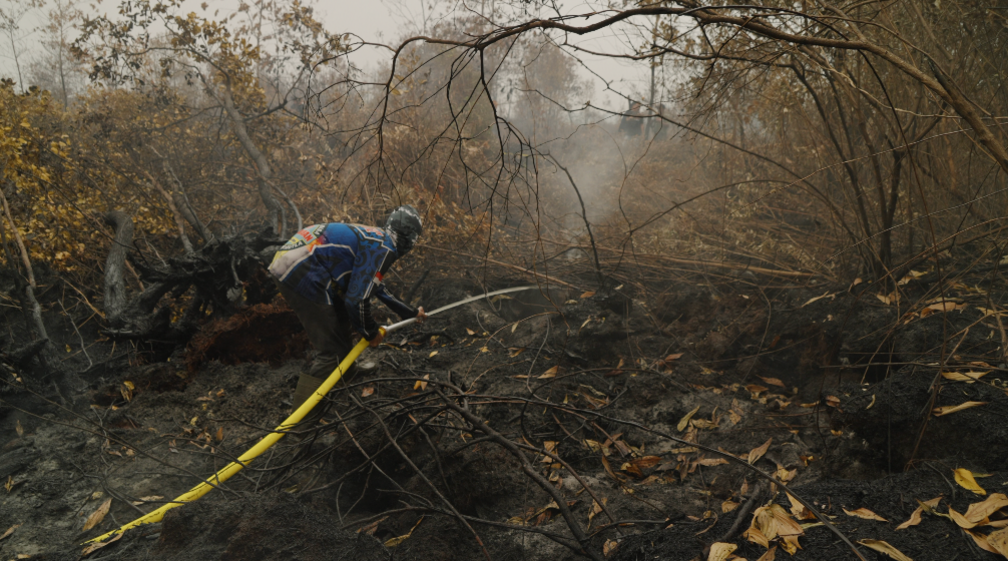
The government has deployed more than 60,000 personnel in a land‑based operation, claiming an 80 per cent success rate. Deni, a firefighter, describes the challenge of water scarcity: peat fires need long, deep water injections that are hard to find in the drought.
Experts urge the use of every safe method to cut the flames. Dr Nisa Novita from a conservation NGO compares the effort to a sinking ship, stressing urgency and collective action among community, military and police.
All eyes await new rainfall that could finally douse the charred earth and bring relief to the people of Borneo, who grow desperate for the day the haze clears and life can resume normally.