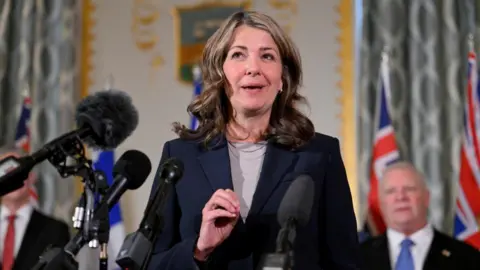
In a landmark decision for Canadian federalism, Alberta Premier Danielle Smith announced a binding referendum on whether the province should remain part of Canada or pursue separation. The vote, scheduled for October 19, 2026, will ask Albertans: 'Should Alberta remain a province of Canada, or should the Government of Alberta commence the legal process required under the Canadian Constitution to hold a binding provincial referendum on whether or not Alberta should separate from Canada?' Smith, who will personally vote against separation, described the decision as 'the first significant test of the country's unity in decades.'
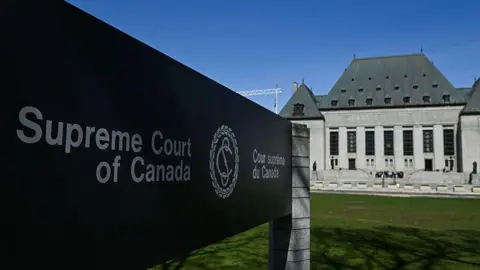
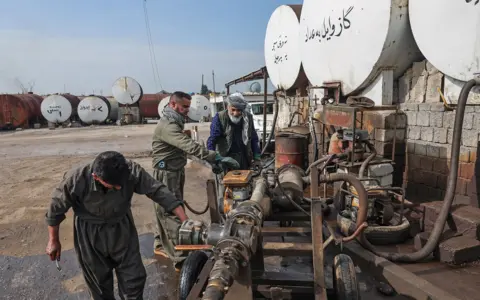
The announcement follows a surge in separatist sentiment in the oil-rich province, where a petition for independence gathered over 300,000 signatures while a counter-petition advocating for continued membership collected more than 400,000. However, recent opinion polls indicate a clear majority of Albertans favor remaining part of Canada. Smith framed the referendum as a response to a court decision earlier this month that invalidated a prior separation petition due to inadequate consultation with Indigenous groups, calling it 'unjustifiable in a free and democratic society.'
'As Premier, I will not have a legal mistake by a single judge silence the voices of hundreds of thousands of Albertans,' Smith declared during her televised address. The premier stressed that the referendum must navigate the strict requirements of the Clarity Act—the law established after Quebec's 1995 referendum—which mandates clear majority support, transparent voting procedures, and federal oversight for any separation process.
The announcement reignited tensions between Alberta and Ottawa, with Smith accusing the federal government of 'moving toward a more centralized American-style system' that infringes on provincial jurisdiction. Prime Minister Mark Carney countered by emphasizing that 'the interests of Albertans and all Canadians are best served when we work together,' though he affirmed the government would enforce the Clarity Act's conditions if separation efforts advanced.
Recent diplomatic efforts show signs of compromise: Smith and Carney announced a climate-energy deal this month that includes building a long-awaited oil pipeline to the Pacific coast, easing economic tensions. Yet, separatist lawyer Jeffrey Rath condemned Smith's decision as a 'political betrayal,' claiming she 'just lost her base' by moving the referendum question 'from the bottom of the deck.'
With Alberta's vast oil reserves and historic resentment over resource development policies, the outcome could reshape Canada's federal structure. Federal officials have rallied behind unity, with Conservative leader Pierre Poilievre vowing to 'campaign every day and every way to unite this country around hope.' Meanwhile, the province's future hangs in the balance as Albertans prepare for what may become Canada's most consequential vote on national unity since Quebec's 1995 referendum.}
The announcement follows a surge in separatist sentiment in the oil-rich province, where a petition for independence gathered over 300,000 signatures while a counter-petition advocating for continued membership collected more than 400,000. However, recent opinion polls indicate a clear majority of Albertans favor remaining part of Canada. Smith framed the referendum as a response to a court decision earlier this month that invalidated a prior separation petition due to inadequate consultation with Indigenous groups, calling it 'unjustifiable in a free and democratic society.'
'As Premier, I will not have a legal mistake by a single judge silence the voices of hundreds of thousands of Albertans,' Smith declared during her televised address. The premier stressed that the referendum must navigate the strict requirements of the Clarity Act—the law established after Quebec's 1995 referendum—which mandates clear majority support, transparent voting procedures, and federal oversight for any separation process.
The announcement reignited tensions between Alberta and Ottawa, with Smith accusing the federal government of 'moving toward a more centralized American-style system' that infringes on provincial jurisdiction. Prime Minister Mark Carney countered by emphasizing that 'the interests of Albertans and all Canadians are best served when we work together,' though he affirmed the government would enforce the Clarity Act's conditions if separation efforts advanced.
Recent diplomatic efforts show signs of compromise: Smith and Carney announced a climate-energy deal this month that includes building a long-awaited oil pipeline to the Pacific coast, easing economic tensions. Yet, separatist lawyer Jeffrey Rath condemned Smith's decision as a 'political betrayal,' claiming she 'just lost her base' by moving the referendum question 'from the bottom of the deck.'
With Alberta's vast oil reserves and historic resentment over resource development policies, the outcome could reshape Canada's federal structure. Federal officials have rallied behind unity, with Conservative leader Pierre Poilievre vowing to 'campaign every day and every way to unite this country around hope.' Meanwhile, the province's future hangs in the balance as Albertans prepare for what may become Canada's most consequential vote on national unity since Quebec's 1995 referendum.}