In brief
New research suggests that during the age of dinosaurs, octopuses could grow as long as 62 feet and hunted alongside other formidable marine predators. Fossil analysis indicates they had strong jaws capable of crushing hard-shelled prey, showcasing their role in ancient marine ecosystems.
NEW YORK (AP) — New analyses of fossilized jaws have revealed that the ancient octopus may have been the top predator in the oceans during the era of the dinosaurs, roughly 100 million years ago.
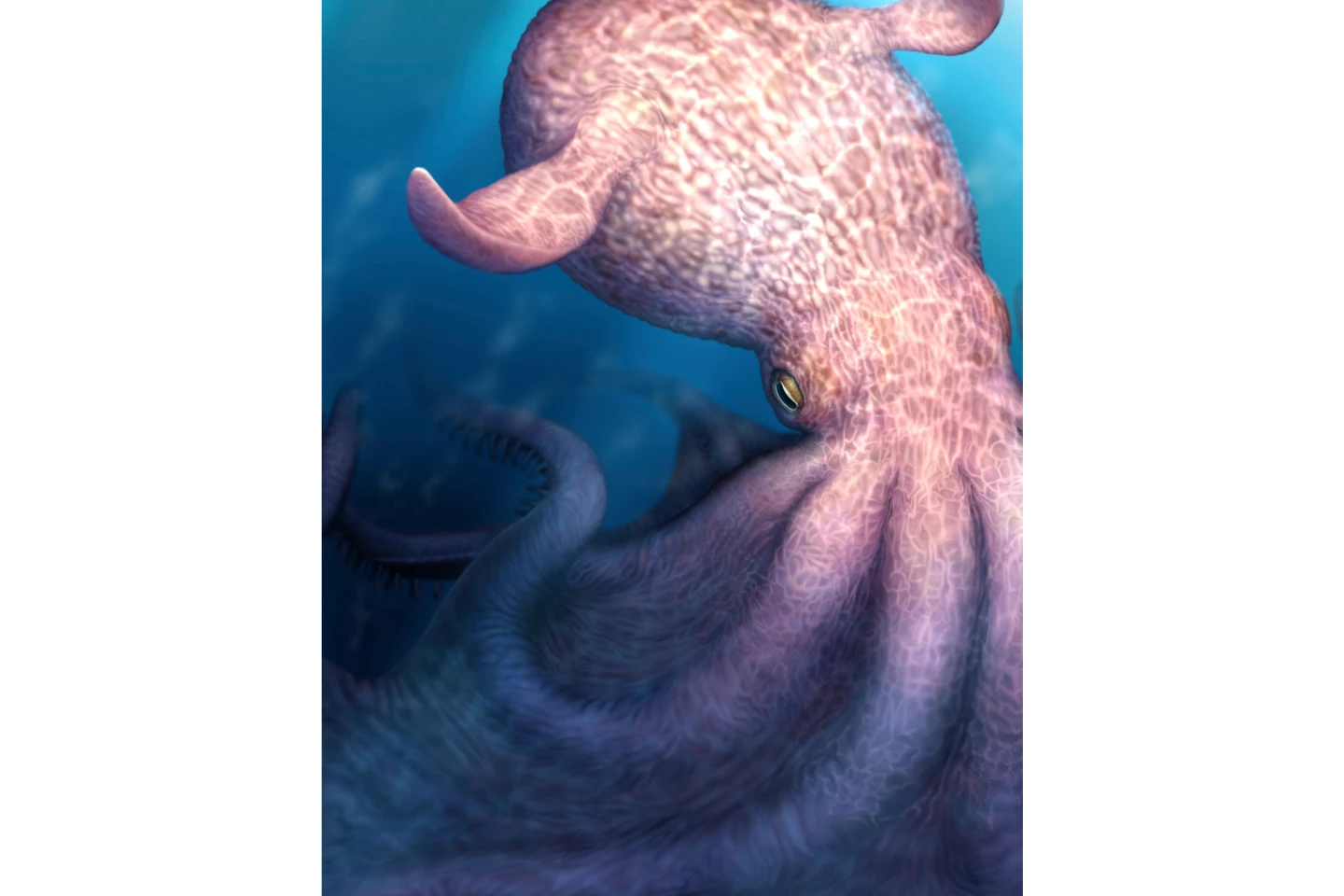
These kraken-like creatures, boasting eight arms and lengths exceeding 60 feet (18 meters), could have hunted alongside and perhaps even rivaled other marine giants such as the mosasaurs and plesiosaurs.
These krakens must have been a fearsome sight to behold, noted University of Alabama paleontologist Adiel Klompmaker, who was not involved in the research.
While late Cretaceous waters are often recognized for their sharks and reptilian hunters, octopuses remain underappreciated in discussions of ancient marine predators. Their soft bodies do not fossilize well, complicating efforts to gauge their size and impact on the ecosystem.
However, their beaks, composed of tough chitin, were effective in crushing hard prey, suggesting a predatory strength previously overlooked. In a recent study, researchers investigated the jaws of 15 octopus fossils from Japan and Canada, as well as more fossils identified through a digital fossil mining technique that uncovers hidden specimens within rock cross-sections.
The researchers compared these ancient jaws to those of modern octopuses, discovering that these extinct giants ranged in size from 23 to 62 feet. The largest fossils exhibited significant wear, indicating their role in crushing hard-shelled animals.
While it remains uncertain what specific prey these ancient octopuses hunted, they likely snacked on fish and mollusks, utilizing their flexible arms and powerful beaks. More fossil discoveries in varied regions may provide insights into the competitive dynamics among ancient marine life.
— The Associated Press Health and Science Department, supported by the Howard Hughes Medical Institute and the Robert Wood Johnson Foundation.